An introduction to digital micrometers: precision and innovation in the mechanical engineering industry
In the world of the mechanical engineering industry, precision is a crucial factor that determines the quality and efficiency of production processes. Digital micrometers are an essential tool for ensuring accurate and reliable measurements. Thanks to their advanced technology, these devices offer unrivalled precision, making them indispensable in a wide range of industrial applications. In this article, we will explore in detail what digital micrometers are, what they are used for, how they are used and what advantages they offer compared to other measurement solutions.
What are digital micrometers and how do they work
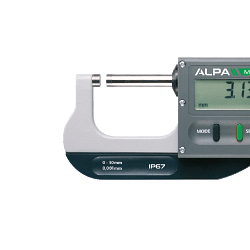
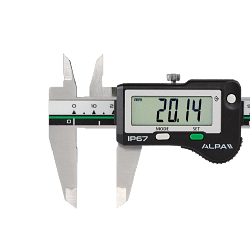
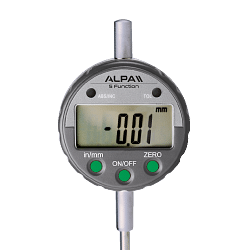
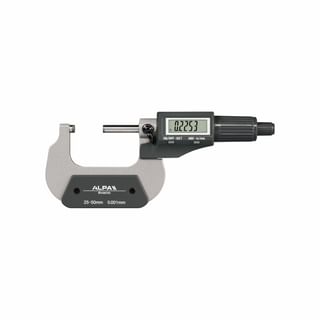
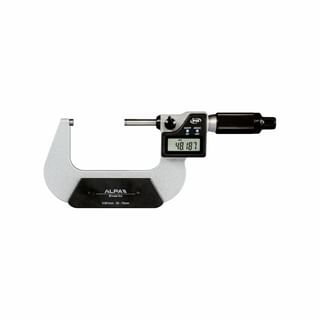
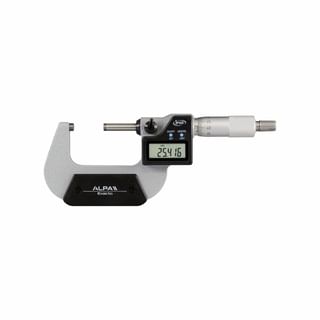
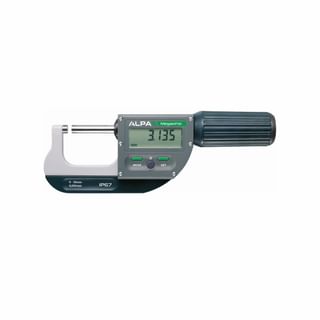
Digital micrometers are measuring instruments used to precisely determine the dimensions of an object. Unlike traditional micrometers, which require manual reading, digital micrometers provide a direct reading on a digital display, thereby eliminating the risk of misinterpretation. The operation of a digital micrometer is based on a micrometer screw system which, when rotated, moves a measuring rod. The position of the rod is detected by an electronic sensor that converts the movement into a digital signal, which is then shown on the display.
Applications of digital micrometers in industry
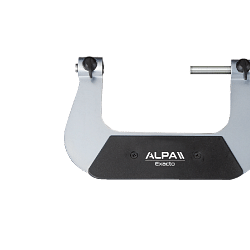
Digital micrometers are used across a wide range of industrial sectors, including the automotive, aerospace, machinery manufacturing and electronics industries. They are used to accurately measure mechanical components, material thicknesses, shaft diameters and much more. Their ability to provide accurate and repeatable measurements makes them ideal for quality control, where compliance with technical specifications is essential.
Advantages of digital micrometers over traditional models
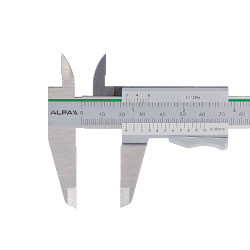
The adoption of digital micrometers offers numerous advantages over traditional models. Firstly, the digital readout eliminates parallax and interpretation errors, ensuring greater accuracy. Furthermore, many digital models are equipped with advanced features, such as the ability to store measurements, transfer data to a computer for analysis, and set custom tolerances. These features not only improve operational efficiency but also reduce the time required for measurements, thereby increasing overall productivity.
How to use a digital micrometer correctly
Using a digital micrometer correctly is essential for obtaining accurate measurements. Before starting, it is important to calibrate the instrument according to the manufacturer’s instructions. During measurement, the object must be positioned correctly between the measuring surfaces, ensuring it is aligned perpendicular to the micrometer’s axis. It is essential to apply a constant and uniform force to prevent deformation of the object. Finally, it is advisable to take multiple measurements to ensure the repeatability and reliability of the results.
Maintenance and care of digital micrometers
To ensure the longevity and accuracy of digital micrometers, it is essential to follow certain maintenance practices. After each use, the instrument must be cleaned with a soft cloth to remove dust and residue. It is important to avoid exposure to excessive humidity and extreme temperatures, which could damage the electronic components. Furthermore, it is advisable to carry out periodic calibration checks to ensure that the instrument maintains its accuracy over time.
Technological innovations in digital micrometers
In recent years, digital micrometers have benefited from significant technological innovations. The integration of advanced sensors and the use of lightweight, durable materials have improved the accuracy and durability of the instruments. Some models feature wireless connectivity, allowing measurement data to be transferred directly to quality management systems, facilitating analysis and traceability. These innovations are transforming digital micrometers into increasingly intelligent and versatile tools.
FAQs on digital micrometers
What is the difference between a digital and an analogue micrometer?
Digital micrometers provide a direct reading on a display, eliminating the interpretation errors common in analogue models.
How do you calibrate a digital micrometer?
Calibrating a digital micrometer requires the use of standard calibration blocks and must be carried out in accordance with the manufacturer’s instructions.
What are the most common applications of digital micrometers?
They are mainly used to measure mechanical components, material thicknesses and shaft diameters across various industrial sectors.
Can digital micrometers be used in damp environments?
It is not recommended to use digital micrometers in damp environments, as moisture can damage the electronic components.
What are the advantages of wireless connectivity in digital micrometers?
Wireless connectivity allows measurement data to be transferred to quality management systems, improving efficiency and traceability.
How do you maintain a digital micrometer?
After use, clean the instrument with a soft cloth and store it in a dry, temperature-controlled environment.
What is the typical accuracy of a digital micrometer?
Accuracy varies depending on the model, but is generally in the order of a few microns.
Are digital micrometers suitable for large-scale measurements?
They are best suited to small measurements; for larger objects, we recommend using other measuring instruments.
Can measurements be stored on a digital micrometer?
Yes, many digital models offer a measurement storage function for later analysis.
What materials are used to construct digital micrometers?
They are generally made from lightweight, durable materials such as stainless steel and aluminium alloys.Read More Read Less