An introduction to face milling cutters and inserts
In the world of machine shops, precision and efficiency are fundamental to ensuring the quality of the final product. Face milling cutters and inserts are essential tools for achieving perfectly smooth and uniform surfaces. These tools are designed to remove material from a surface, creating a flat and uniform finish. They are of crucial importance in sectors such as aerospace, the automotive industry and many others, where precision is an absolute requirement.
What are face milling cutters and inserts?
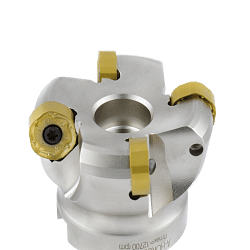
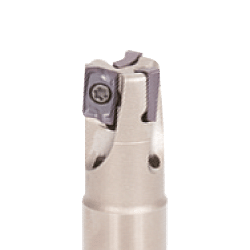
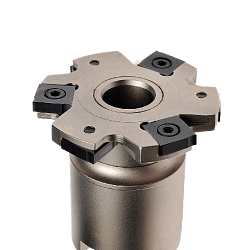
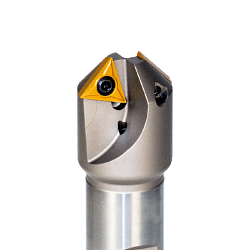
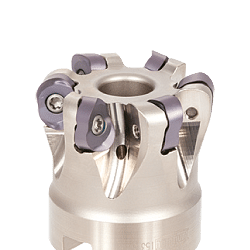
Facing cutters are cutting tools used to machine flat surfaces on metal workpieces or other materials. They consist of a main body and interchangeable inserts that perform the actual cutting. Facing inserts, on the other hand, are small components made of carbide or ceramic that are fitted onto the milling cutter and are responsible for cutting the material. These inserts can be replaced when they wear out, making the tool more cost-effective and versatile.
What are face milling cutters and inserts used for?
Face milling cutters and inserts are mainly used to create flat, smooth surfaces on workpieces. This process is essential for preparing parts for further machining or to ensure they fit perfectly with other components. Facing is a critical stage in the production of mechanical components, as it directly affects the quality and precision of the final product.
How are face milling cutters and inserts used?
Using face milling cutters and inserts requires technical expertise and a thorough understanding of machine tools. Before starting, it is essential to select the appropriate cutter and inserts based on the material to be machined and the desired finish. Once mounted on the machine tool, the milling cutter is rotated at high speed whilst being fed across the workpiece. The inserts cut away the excess material, creating a flat surface. It is important to monitor the process constantly to ensure that the milling cutter and inserts do not overheat or wear out prematurely.
Advantages of using face milling cutters and inserts
The use of face milling cutters and inserts offers numerous advantages. Firstly, they enable extremely smooth and precise surfaces to be achieved, improving the quality of the final product. Furthermore, thanks to the ability to replace the inserts, these tools are more cost-effective in the long term compared to solid-body tools. The versatility of face milling cutters makes them suitable for a wide range of materials, including hard metals and complex alloys. Finally, the efficiency of the face milling process reduces machining times, increasing the workshop’s overall productivity.
FAQs on face milling cutters and inserts
Which materials can be machined with face milling cutters?
Facing cutters can machine a wide range of materials, including steel, aluminium, cast iron and special alloys.
How do you choose the right insert for a face milling cutter?
The choice of insert depends on the material to be machined, the desired cutting speed and the required surface finish.
What is the difference between indexable insert cutters and solid cutters?
Indexable insert cutters have interchangeable components, whilst solid-body cutters are made from a single piece. The former are more cost-effective in the long term.
How long do face milling inserts last?
The service life of inserts depends on the material being machined and the operating conditions, but generally they can last for several hours of continuous machining.
Can face milling cutters be used on CNC machines?
Yes, face milling cutters are commonly used on CNC machines to ensure precision and repeatability.
What are the signs of wear on face milling inserts?
Signs of wear include a reduction in surface finish quality and an increase in the cutting force required.
How do you keep a face milling cutter in good condition?
It is important to clean the cutter regularly, replace worn inserts and lubricate moving parts to ensure optimum performance.
What are the recommended cutting speeds for face milling cutters?
Cutting speeds vary depending on the material and the insert used, but it is essential to follow the manufacturer’s recommendations.
Can face milling cutters be used for precision machining?
Yes, face milling cutters are ideal for precision machining thanks to their ability to produce smooth, uniform surfaces.
What are the current trends in the design of face milling cutters?
Current trends include the use of advanced materials for inserts and optimised designs to reduce vibration and improve tool life.