< Milling cutters Milling cutters and inserts for counterbores and smoothing
CNC milling cutters and inserts: a complete guide for machine shops
In the world of machining, the use of CNC milling cutters and inserts for milling and chamfering is a crucial element in ensuring precision and quality in production processes. These tools, essential for machine shops, offer a wide range of applications from surface finishing to creating chamfered corners, improving the efficiency and quality of the final product.
Understanding CNC milling cutters and inserts for face milling and chamfering
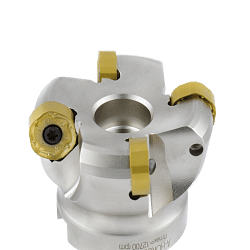
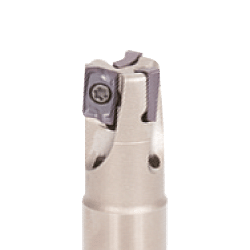
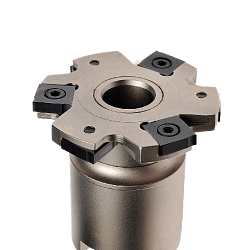
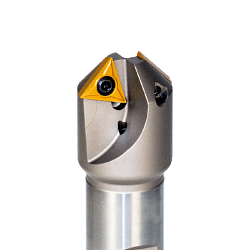
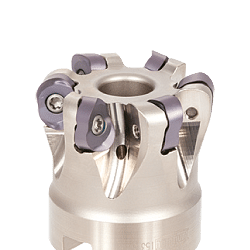
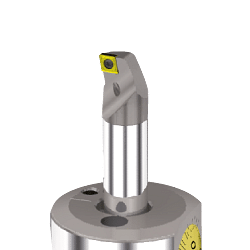
CNC milling and chamfering cutters and inserts are cutting tools designed to work on CNC machines. These tools are used to remove material from a workpiece, creating smooth surfaces and precise angles. Cutters are generally made of high-strength materials such as tungsten carbide, which ensures long life and wear resistance. Inserts, on the other hand, are interchangeable components that fit onto the cutter, allowing the tool to be adapted to different machining requirements.
Applications and advantages of CNC milling cutters and inserts
The use of CNC milling cutters and inserts offers numerous advantages to machine shops. First of all, the precision of the numerical control allows for very tight tolerances, improving the quality of the final product. Furthermore, the ability to programme CNC machines to perform complex operations reduces machining time and increases productivity.
Another significant advantage is versatility. The cutters and inserts can be used on a wide range of materials, including metals, alloys, plastics and composites. This makes them ideal for applications in industries as diverse as automotive, aerospace, electronics and toolmaking.
How to choose the right cutters and inserts
Choosing the right cutters and inserts is crucial to optimising your milling and chamfering operations. It is important to consider several factors, including the workpiece material to be machined, the desired cutting speed and the required surface finish. Tungsten carbide cutters are ideal for high-speed machining on hard materials, while ceramic inserts can be used for applications requiring even greater wear resistance.
In addition, the geometry of the insert plays a crucial role in the quality of machining. Inserts with positive cutting angles reduce cutting forces and improve surface finish, while those with negative angles offer greater stability and durability.
Techniques for using CNC milling cutters and inserts
To get the best results from CNC milling cutters and inserts, it is essential to follow certain usage techniques. Firstly, it is important to keep the tools sharp and in good condition, as a worn tool can compromise the quality of machining. Also, the correct programming of the CNC machine is crucial to ensure that cutting operations are performed accurately.
Another crucial aspect is the choice of cutting parameters, such as feed speed and depth of cut. These parameters must be optimised according to the workpiece material and type of machining to avoid problems such as tool breakage or poor surface quality.
Frequently asked questions about CNC milling and chamfering cutters and inserts
1. What are the most common materials used for CNC milling cutters and inserts?
CNC cutters and inserts are commonly made of tungsten carbide, ceramic, cermet and polycrystalline diamond (PCD), depending on the specific machining requirements.
2. How can I improve the tool life of CNC milling cutters and inserts?
To improve tool life, it is important to maintain proper lubrication during machining, use appropriate cutting parameters and replace worn inserts in a timely manner.
3. What are the differences between insert milling cutters and monolithic milling cutters?
Insert cutters use interchangeable inserts, which can be replaced when worn, while monolithic cutters are made in one piece and must be resharpened or replaced when worn.
4. Can CNC milling cutters and inserts be used on non-metallic materials?
Yes, CNC milling cutters and inserts can be used on a variety of non-metallic materials, such as plastic, wood and composite materials, adapting the cutting parameters to the characteristics of the material.
5. What are the future trends in CNC milling cutters and inserts?
Future trends include the development of advanced insert materials, such as nanotechnology coatings, and the integration of artificial intelligence technologies to optimise machining processes.
Conclusions
CNC milling and chamfering cutters and inserts are indispensable tools for modern machine shops. Their ability to guarantee precision, efficiency and versatility makes them an ideal choice for a wide range of industrial applications. Understanding the characteristics and techniques of using these tools is crucial to optimising production processes and achieving high quality results. As technologies and materials continue to evolve, CNC milling cutters and inserts will continue to play a key role in the future of machining.
Read More Read Less