




Register and use the discount code NEWWELCOME to get 10% off on your first purchase. GET DISCOUNT.

Free shipping in 24h from 200€

< Solid cutting tools

Taps for threading

Introduction to thread taps: an essential element in machine shops


In the world of machine shops, thread taps are an essential component for creating internal threads in materials. These tools are indispensable for ensuring precision and reliability in assembly and repair processes. In this article, we will explore in detail what thread taps are, what they are used for, how they are used and what advantages they offer. In addition, we will answer frequently asked questions to provide a complete understanding of these essential tools.

Understanding thread taps: definition and function


Thread taps are tools used to create internal threads in the holes of a workpiece. These tools are designed to cut precise and uniform threads, allowing for the secure coupling of screws and bolts. Their main function is to ensure that mechanical connections are stable and strong, reducing the risk of loosening or structural failure.

Types of thread taps and their applications


There are different types of thread taps, each designed for specific applications and materials. Among the most common are:

1. hand taps: used for manual operations, ideal for precision work and repairs.
2. machine taps: designed for use with machine tools, they offer speed and precision in manufacturing processes.
3. rolling taps: create threads without removing material, ideal for ductile materials.
4. taper taps: used to start threads, they facilitate material entry.
5. spiral taps: designed to evacuate chips, ideal for materials that produce long chips.

How to use thread taps correctly


The correct use of thread taps is crucial for optimal results. Here is a step-by-step guide for effective use:

1. selecting the appropriate tap: choose the right tap based on the material and type of thread desired.
2. preparing the hole: make sure the hole is the correct size and well lubricated to reduce friction.
3. inserting the tap: start with a conical tap to facilitate entry and continue with intermediate and end taps.
4. application of uniform force: apply constant, even pressure to avoid breakage or damage.
5. chip removal: use spiral taps or lubricants to evacuate chips and prevent jamming.

Advantages of using thread taps


The use of thread taps offers numerous advantages, including

- precision: they guarantee precise and uniform threads, essential for secure connections.
- efficiency: they reduce machining time due to their ability to create threads quickly.
- versatility: available in different types to suit various materials and applications.
- reliability: they improve the strength of mechanical connections, reducing the risk of failure.
- cost-effectiveness: they reduce the need for frequent repairs and replacements, lowering operating costs.

FAQ on thread taps


What are the most common materials for thread taps?

Thread taps are commonly made of high-speed steel (HSS) or tungsten carbide, materials that offer strength and durability.

How do I choose the right tap for a specific application?

The choice of tap depends on the workpiece material, the type of thread desired and the operating conditions, such as speed and lubrication.

What are the differences between hand and machine taps?

Hand taps are designed for manual operations, while machine taps are used with machine tools for greater speed and precision.

How can taps be prevented from breaking during use?

To prevent breakage, it is important to use the correct tap, apply an even force and make sure the hole is well lubricated.

What are the signs of wear on a thread tap?

Signs of wear include difficulty in cutting, uneven threads and an increase in the force required for the operation.

Can thread taps be reground?

Yes, taps can be reground to extend their service life, but it is important to use professionals to ensure accuracy.

What are the best practices for maintenance of thread taps?

Best practices include regular cleaning, lubrication and periodic inspection for damage or wear.

How does lubrication affect the effectiveness of thread taps?

Lubrication reduces friction, facilitates chip evacuation and extends tap life, improving overall effectiveness.

What are the most common industrial applications for thread taps?

Thread taps are used in industries such as automotive, aerospace, machine manufacturing and construction to create threaded connections.

How do you determine the correct hole size for a tap?

The size of the hole depends on the diameter of the tap and the desired thread pitch, and is essential to ensure an accurate thread.
Filters

99 Items

Set Ascending Direction
View as List Grid

99 Items

A2157
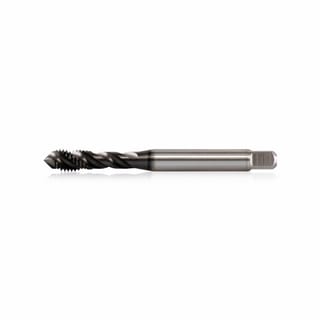
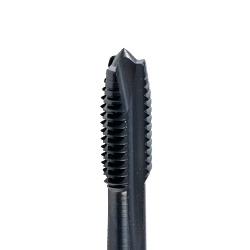
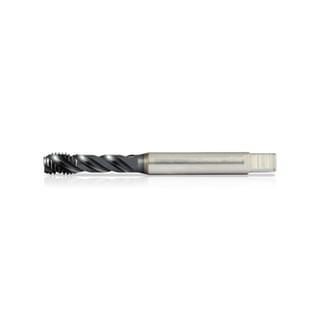
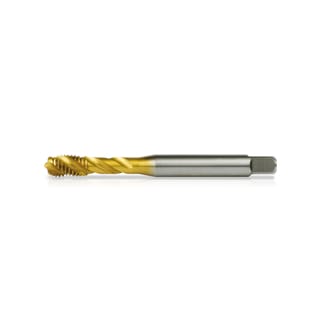
High-speed steel tap made from powdered steel, with a 40° helical cutting edge, right-hand thread C 2/3 M3 – M16, blind hole, DIN 13 – M KX1 UNIVERSAL KERFOLG
Product Information
ThreadDIN13 - M
DiameterM3 - M16
MaterialsP - M - K - N - S
Hole typeCieco
Shank typeDIN 371 - DIN 376
As low as € 51,50

In stock Few pieces Available on order
Loading availability
As low as € 51,50
A2152
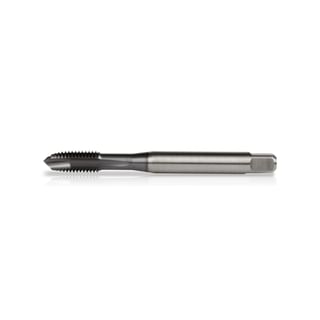
High-speed steel tap made from powdered steel, straight cutting edge, right-hand thread B 4/5 M3 – M16 through-hole DIN 13 – M KX1 UNIVERSAL KERFOLG
Product Information
ThreadDIN13 - M
DiameterM3 - M16
MaterialsP - M - K - N - S
Hole typePassante
Shank typeDIN 371 - DIN 376
As low as € 47,10
In stock Few pieces Available on order
Loading availability
As low as € 47,10
A2220
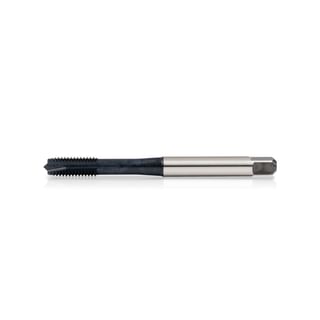
HSSE tap with straight cutting edge, right-hand thread, B 4/5, M3–M20 through-hole, DIN 13 – M KX2 POWER KERFOLG
Product Information
ThreadDIN13 - M
DiameterM3 - M20
MaterialsP - M
Hole typePassante
Shank typeDIN 371 - DIN 376
As low as € 33,80
In stock Few pieces Available on order
Loading availability
As low as € 33,80
A2210
HSSE tap with straight cutting edge, right-hand thread B 4/5 M2 – M30 through-hole DIN 13 – M VAP STANDARD KERFOLG
Product Information
ThreadDIN13 - M
DiameterM2 - M30
MaterialsP - K - N
Hole typePassante
Shank typeDIN 371 - DIN 376
As low as € 23,00
In stock Few pieces Available on order
Loading availability
As low as € 23,00
A2215
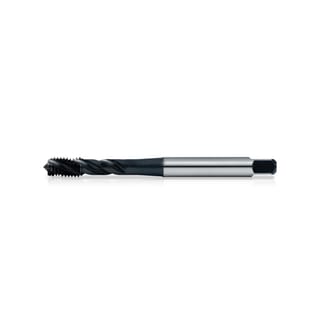
HSSE tap with 40° helical cutting edge, right-hand thread C 2/3 M2 – M30, blind hole, DIN 13 – M VAP STANDARD KERFOLG
Product Information
ThreadDIN13 - M
DiameterM2 - M30
MaterialsP - K - N
Hole typeCieco
Shank typeDIN 371 - DIN 376
As low as € 25,10
In stock Few pieces Available on order
Loading availability
As low as € 25,10
A2022
HSSE tap with straight cutting edge, right-hand thread, B 4/5, M3–M16 through-hole, DIN 13 – M BRIGHT STANDARD KERFOLG
Product Information
ThreadDIN13 - M
DiameterM3 - M16
MaterialsP - N
Hole typePassante
Shank typeDIN 371 - DIN 376
As low as € 32,03
In stock Few pieces Available on order
Loading availability
As low as € 32,03
A2042
HSSE tap with 40° helical cutting edge, right-hand thread C 2/3 M4 – M16, blind hole DIN 13 – M BRIGHT STANDARD KERFOLG
Product Information
ThreadDIN13 - M
DiameterM4 - M16
MaterialsP - N
Hole typeCieco
Shank typeDIN 371 - DIN 376
As low as € 32,03
In stock Few pieces Available on order
Loading availability
As low as € 32,03
A2060
HSSE tap with straight cutting edge, left-hand thread, C 2/3, M3–M20, blind hole, DIN 13 – M BRIGHT STANDARD KERFOLG
Product Information
ThreadDIN13 - M
DiameterM3 - M20
MaterialsP - K
Hole typeCieco
Shank typeDIN 371 - DIN 376
As low as € 26,30
In stock Few pieces Available on order
Loading availability
As low as € 26,30
Page
per page