< Workshop equipment Bench grinders
An introduction to bench grinders: a mainstay in mechanical workshops
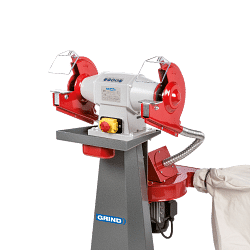
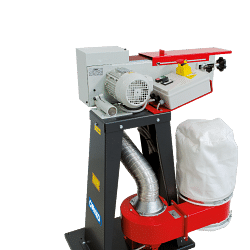
Bench grinders are an essential tool in mechanical workshops, offering a level of versatility and precision that few other tools can match. These machines are designed to perform a variety of tasks, including grinding, sharpening and polishing a range of materials. Their robustness and reliability make them indispensable for anyone working in the mechanical engineering sector, ensuring high-quality results and greater operational efficiency.
How bench grinders work and how to use them
Bench grinders consist of an electric motor that drives one or more abrasive wheels. These wheels, available in different grits and materials, allow for precise work on both metallic and non-metallic surfaces. The operator can adjust the speed and pressure applied to achieve the desired result, whether it be removing excess material, sharpening tools or finishing surfaces.
Using a bench grinder requires skill and care. It is essential to wear personal protective equipment, such as safety goggles and gloves, to prevent accidents. Furthermore, it is important to keep the work area clean and well-lit to ensure maximum safety.
Advantages of bench grinders in mechanical workshops
The use of bench grinders in mechanical workshops offers numerous advantages. Firstly, their ability to perform multiple operations with a single tool reduces the need for additional equipment, optimising both space and costs. Furthermore, the precision of bench grinders enables high-quality finishes to be achieved, improving overall efficiency and productivity.
Another significant advantage is their durability. Built to withstand demanding working conditions, bench grinders require minimal maintenance, ensuring reliable operation over time. This translates into savings on maintenance and replacement costs, making them a worthwhile investment for any workshop.
Frequently asked questions about bench grinders
What are the main applications of bench grinders?
Bench grinders are mainly used for sharpening tools, deburring, smoothing surfaces and polishing materials.
What materials can be worked on with a bench grinder?
Bench grinders can process a wide range of materials, including metals, wood and plastics, depending on the type of grinding wheel used.
How do you choose the right abrasive wheel for a bench grinder?
The choice of abrasive wheel depends on the material to be worked on and the type of finish required. It is important to consider the grit size and the material of the wheel.
What safety precautions should be taken when using a bench grinder?
It is essential to wear personal protective equipment, keep the work area clean and follow the manufacturer’s instructions to ensure safe use.
How do you maintain a bench grinder?
Maintenance includes regular cleaning, checking the condition of the grinding wheels and inspecting moving parts to ensure optimal performance.
What is the difference between a bench grinder and a portable grinder?
Bench grinders are stationary and offer greater stability and power, whilst portable grinders are more versatile and suitable for working in confined spaces.
How long does a bench grinder last?
Lifespan depends on usage and maintenance, but generally speaking, a good-quality grinder can last for many years.
Can a bench grinder be used to sharpen saw blades?
Yes, bench grinders are ideal for sharpening saw blades, ensuring a precise and clean cut.
What are the signs that an abrasive wheel needs replacing?
Signs such as excessive vibration, uneven wear or reduced effectiveness indicate that it is time to replace the grinding wheel.
Are bench grinders suitable for precision work?
Yes, thanks to their stability and adjustable speed, bench grinders are ideal for precision work.Read More Read Less