< Workshop equipment Manual bench vices
An introduction to manual bench vices
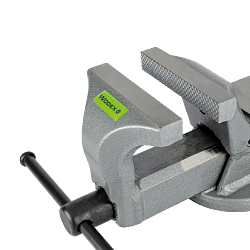
Manual bench vices are an essential tool in mechanical workshops, providing stable and secure support for a variety of machining operations. These devices, known for their robustness and versatility, are designed to hold workpieces firmly in place during machining, enabling operators to carry out cutting, drilling and other operations with precision and safety.
Operation and use of manual bench vices
Manual bench vices operate via a screw mechanism that allows the jaws to be tightened or loosened, adapting to workpieces of different sizes. The operator turns a handle, which in turn moves a threaded screw, bringing the jaws closer together or moving them further apart. This simple yet effective mechanism ensures a firm and secure grip, which is essential for precision work.
In machine shops, manual bench vices are used for a wide range of applications, including clamping workpieces for machining with hand or power tools. Their ability to keep workpieces stable reduces the risk of errors and improves the quality of the final result.
Advantages of manual bench vices
Using manual bench vices offers numerous advantages. Firstly, their robust and durable construction makes them suitable for withstanding heavy loads and demanding working conditions. Furthermore, the simplicity of their design makes them easy to use and maintain, reducing downtime and maintenance costs.
Another significant advantage is their versatility. Manual bench vices can be used with a wide range of materials, from metals to wood, making them an indispensable tool in any mechanical workshop. Their ability to adapt to workpieces of different shapes and sizes makes them ideal for a variety of applications.
How to choose the right manual bench vice
When choosing a manual bench vice, it is important to consider several factors to ensure you select the model best suited to your needs. The size of the vice is a crucial aspect: it must be large enough to accommodate the workpieces you intend to work on, but not so large as to be cumbersome or difficult to handle.
The quality of the materials is another important factor. Vices made from high-quality steel offer greater durability and resistance to wear and tear than those made from less robust materials. Furthermore, it is important to consider ease of use and the presence of additional features, such as interchangeable jaws or quick-release mechanisms, which can enhance the vice’s efficiency and versatility.
Maintenance of manual bench vices
To ensure that manual bench vices operate optimally and last for a long time, regular maintenance is essential. This includes cleaning the jaws and the screw mechanism to remove debris and machining residues that could impair the vice’s operation.
It is also important to lubricate the screw and moving parts periodically to reduce friction and prevent wear. Finally, check the vice regularly for any signs of damage or wear and replace any damaged or worn parts to keep the vice in top condition.
Frequently asked questions about manual bench vices
What are the most common materials used for manual bench vices?
Manual bench vices are commonly made from steel or cast iron, materials known for their strength and durability.
How can I improve the grip of my manual bench vice?
To improve the grip, ensure that the jaws are clean and free from debris. Also, consider using rubber-coated jaws for a more secure grip on delicate materials.
What is the difference between a manual bench vice and a hydraulic vice?
Manual bench vices use a screw mechanism to tighten the jaws, whilst hydraulic vices use hydraulic pressure to achieve a stronger and more uniform grip.
Can I use a manual bench vice to work on non-metallic materials?
Yes, manual bench vices can be used on a variety of materials, including wood and plastic, provided the jaws are suitable for the specific material.
How can I avoid damaging workpieces when clamping them in a manual bench vice?
To avoid damage, use coated jaws or rubber pads and do not overtighten the vice.
What is the typical opening capacity of a manual bench vice?
The opening capacity varies depending on the model, but most manual bench vices offer an opening of between 100 and 200 millimetres.
Do manual bench vices require frequent maintenance?
Yes, regular maintenance is essential to ensure the vice functions correctly and has a long service life.
Can I replace the jaws on my manual bench vice?
Many models of manual bench vices have interchangeable jaws, allowing you to replace them easily in the event of wear or damage.
What are the ideal dimensions for a manual bench vice in a mechanical workshop?
The ideal size depends on the specific needs of the workshop, but a vice with a jaw opening of at least 150 millimetres is generally suitable for most applications.
Are manual bench vices suitable for precision work?
Yes, thanks to their ability to hold workpieces securely in place, manual bench vices are ideal for precision work.Read More Read Less