< Workshop equipment Tapered milling cutters for sheet metal
An introduction to conical sheet metal cutters
Tapered sheet metal cutters are an essential tool in modern mechanical workshops. Designed to work with precision on metal surfaces, these tools are vital for achieving high-quality results across a variety of industrial applications. In this article, we will explore in detail what conical sheet metal cutters are, what they are used for, how to use them and what advantages they offer. We will also answer ten frequently asked questions to clear up any doubts on this topic.
What are conical sheet metal cutters?
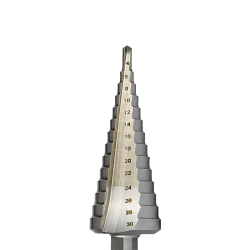
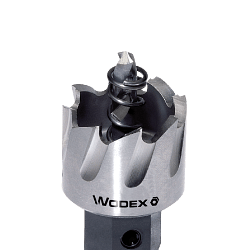
Tapered sheet metal cutters are cutting tools specifically designed for working on thin metal surfaces. Their tapered shape allows for precise and clean cuts, minimising material deformation. These tools are made from high-speed steel or tungsten carbide, materials that ensure strength and durability. Tapered cutters are available in various sizes and angles, allowing them to be adapted to a wide range of applications.
Applications of conical sheet metal cutters
Conical sheet metal cutters are used in numerous industrial sectors, including the automotive, aerospace and household appliance manufacturing industries. They are used to create tapered holes, chamfer edges and finish surfaces. Thanks to their versatility, they can be used on various types of metal, such as steel, aluminium and copper. Their ability to make precise cuts makes them ideal for applications requiring tight tolerances and high-quality finishes.
How to use conical sheet metal cutters
Correct use of conical sheet metal cutters is essential for achieving optimal results. Before starting, it is important to select the conical cutter suitable for the type of material and the specific application. Once the cutter has been chosen, the workpiece must be securely clamped to prevent vibrations and unwanted movement. During the milling operation, it is advisable to use a lubricant to reduce friction and extend the tool’s service life. Finally, it is essential to maintain a constant cutting speed to ensure a uniform finish.
Advantages of conical sheet metal cutters
The use of conical sheet metal cutters offers numerous advantages. Firstly, their ability to make precise cuts reduces the need for subsequent machining operations, saving time and resources. Furthermore, the conical shape allows cutting forces to be distributed evenly, minimising material deformation and improving the quality of the final product. Tapered cutters are also highly versatile, adapting to a range of applications and materials. Finally, their durability and resistance to wear make them a cost-effective investment for machine shops.
Frequently asked questions about conical sheet metal cutters
What materials can be machined with conical sheet metal cutters?
Tapered sheet metal cutters can be used on a wide range of metals, including steel, aluminium, copper and metal alloys.
What is the difference between conical cutters and cylindrical cutters?
Tapered cutters have a tapered shape that allows for tapered cuts and chamfers, whilst cylindrical cutters are designed for straight, uniform cuts.
How do I choose the right conical cutter for my application?
The choice of tapered milling cutter depends on the type of material to be machined, the required angle and the dimensions of the hole or cut to be made.
Is it necessary to use a lubricant when milling?
Yes, the use of a lubricant is recommended to reduce friction, improve cut quality and extend the tool’s service life.
What are the standard sizes of conical cutters for sheet metal?
Tapered milling cutters are available in various sizes, with angles usually ranging from 60 to 120 degrees.
Can I use conical milling cutters on non-metallic materials?
Although primarily designed for metals, some conical cutters can be used on plastics and composites, depending on the manufacturer’s specifications.
How can I keep conical milling cutters in good condition?
To keep conical cutters in good condition, it is important to clean them regularly, avoid overheating and store them in a dry place.
What are the signs of wear on a conical milling cutter?
Signs of wear include a reduction in cutting quality, increased resistance during milling, and the presence of chips or cracks on the tool.
Can conical milling cutters be resharpened?
Yes, many conical milling cutters can be resharpened to extend their service life, but it is important to use professionals to ensure the best results.
What safety precautions should be taken when using conical milling cutters?
It is essential to wear personal protective equipment, such as safety goggles and gloves, and to follow the manufacturer’s instructions to ensure the safe use of conical milling cutters.Read More Read Less