< Measuring and precision tools Snap gauges
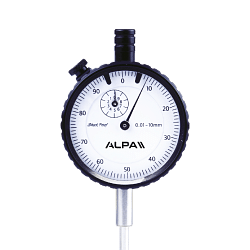
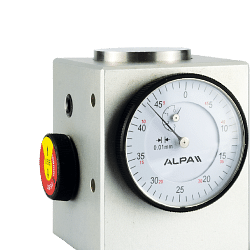
Precision dial gauges: essential tools for the mechanical industry
In the world of mechanical engineering, precision is a crucial element that determines the quality and reliability of end products. Among the tools that play a key role in ensuring such precision, dial gauges with precision touch probes stand out for their ability to accurately measure dimensions and tolerances. These instruments are indispensable for machine shops that aim to maintain high quality standards and meet the needs of the most demanding customers.
What are dial gauges with precision touch probes?
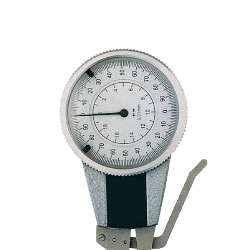
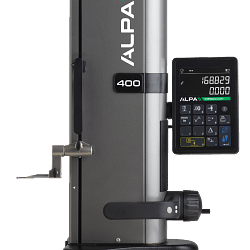
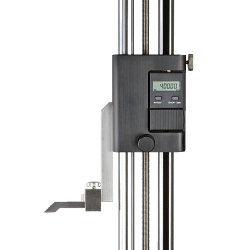
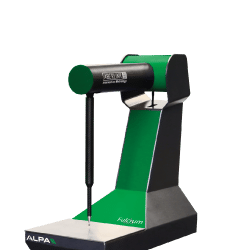
Dial gauges with precision feeler arms are measuring instruments used to detect small dimensional variations in a mechanical component. They consist of an indicator, usually a dial or digital display, connected to a probe arm that makes contact with the surface of the part to be measured. The main function of these instruments is to compare a measured dimension with a reference dimension, allowing any discrepancies to be identified.
Use and applications in industrial processes
The use of dial gauges with precision probe arms is widespread in various industrial sectors, including automotive, aerospace and machine manufacturing. These instruments are used at various stages of the production process, from checking raw materials to measuring finished components. In particular, they are used to check the flatness, roundness, concentricity and other critical geometric characteristics of machined parts.
Advantages of using dial gauges with precision probe arms
The adoption of dial gauges with precision touch probe arms offers numerous advantages to machine shops. Firstly, they ensure highly accurate measurements, minimising human error and improving overall product quality. Furthermore, these instruments are versatile and can be used on a wide range of materials and shapes, making them suitable for many applications. Their ease of use and ability to provide immediate results make them ideal tools for optimising production processes.
How to choose the right dial indicator for your needs
The choice of the most suitable dial indicator with precision probe arms depends on several factors, including the specificity of the measurements required, the type of materials to be measured and the environmental conditions of the workshop. It is important to consider the resolution and accuracy of the instrument, as well as its robustness and resistance to wear. In addition, compatibility with other measuring instruments and ease of integration into existing processes are aspects to be considered.
Maintenance and care of dial gauges with precision probe arms
To ensure the longevity and reliability of dial gauges with precision probe arms, regular maintenance is essential. This includes thoroughly cleaning the instrument after each use, periodic calibration to maintain measurement accuracy, and checking the condition of the probe arm. In addition, it is advisable to store dial gauges in a controlled environment to avoid damage caused by humidity or extreme temperatures.
Frequently asked questions about dial gauges with precision probe arms
1. What is the difference between an analogue and a digital dial gauge?
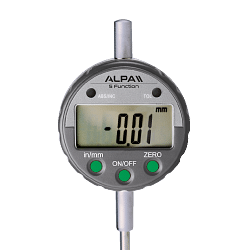
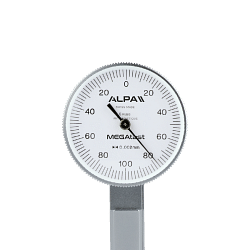
Analogue dial gauges use a dial to display measurements, whereas digital dial gauges show results on an electronic display. Digital dial gauges offer a more immediate and accurate reading, but analogue models are often preferred for their simplicity and reliability in harsh environments.
2. How do I calibrate a dial indicator with precision probe arms?
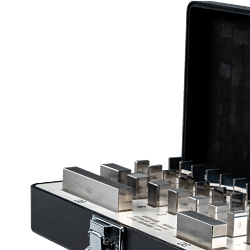
Calibrating a dial indicator requires the use of precision calibration blocks. The dial gauge is zeroed on a known reference block, and measurements are then taken on other blocks to verify the accuracy of the instrument.
3. What are the main causes of errors in comparator measurements?
Errors can result from improper calibration, wear of the probe arm, unfavourable environmental conditions or improper use of the instrument. It is important to follow the manufacturer's guidelines to minimise these errors.
4. Can dial gauges with precision probe arms be used on uneven surfaces?
Yes, dial gauges can be used on uneven surfaces, but it is important to choose the most suitable type of probe arm to ensure proper contact and accurate measurements.
5. What are the recent innovations in dial gauges with precision probe arms?
Recent innovations include the integration of wireless technologies for data transmission, the use of advanced materials to improve strength and accuracy, and the development of analysis software for processing measurement data.
In conclusion, precision touch-trigger gauges are a key investment for machine shops striving for manufacturing excellence. Their ability to provide accurate and reliable measurements helps improve product quality and optimise production processes, making them indispensable tools in the modern industrial landscape.
Read More Read Less