< Measuring and precision tools Analogue micrometers
An introduction to analogue micrometers: precision instruments for industry
Analogue micrometers are among the most essential and precise measuring instruments used in mechanical workshops and across various industrial sectors. These instruments are designed to measure the dimensions of objects with extreme precision, ensuring that technical specifications are met at every stage of the production process. Their importance is crucial in a context where precision is synonymous with quality and reliability.
What are analogue micrometers and how do they work
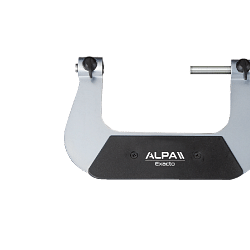
Analogue micrometers are measuring instruments that use a mechanical system to determine the dimensions of an object. They consist of a U-shaped frame, a graduated drum, a threaded rod and a measuring rod. They operate on the principle of the micrometer screw, where rotation of the graduated drum moves the threaded rod, allowing the thickness or diameter of an object to be measured with precision. The scale on the drum and rod allows measurements to be read with an accuracy of up to one hundredth of a millimetre.
Practical applications of analogue micrometers
Analogue micrometers are used across a wide range of industrial sectors. In machine shops, they are used to measure metal components, ensuring that the parts produced meet the tolerances specified in technical drawings. In the automotive industry, micrometers are used to check the precision of engine and transmission components. In the aerospace sector too, where precision is paramount, analogue micrometers are indispensable tools for ensuring the safety and efficiency of components.
Advantages of using analogue micrometers
The use of analogue micrometers offers numerous advantages. First and foremost, their precision is unrivalled, allowing for accurate measurements that are essential to guarantee the quality of the final product. Furthermore, analogue micrometers are robust and durable tools, designed to withstand the harsh conditions of mechanical workshops. Their ease of use makes them accessible even to less experienced operators, whilst maintenance is minimal, ensuring a long service life for the instrument.
How to use an analogue micrometer correctly
To obtain accurate measurements with an analogue micrometer, it is essential to follow certain guidelines. First of all, ensure that the instrument is correctly calibrated. During measurement, the object must be positioned between the measuring rod and the anvil, and the drum must be rotated until the object is securely clamped. It is important not to apply too much force to avoid damaging the instrument or the object. Finally, read the measurement on the scale carefully to ensure accuracy.
Maintenance and care of analogue micrometers
Maintaining analogue micrometers is essential to ensure their longevity and accuracy. After each use, it is advisable to clean the instrument with a soft cloth to remove dust and debris. Periodically lubricating the moving parts with a light oil helps prevent wear and corrosion. Furthermore, storing the micrometer in a dry place, protected from knocks and drops, is essential to maintain its functionality over time.
Frequently asked questions about analogue micrometers
What is the difference between an analogue and a digital micrometer?
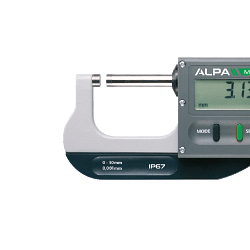
Analogue micrometers use a mechanical scale for measurements, whilst digital ones provide electronic readings on a display.
How do you calibrate an analogue micrometer?
An analogue micrometer is calibrated using standard calibration blocks to check and adjust the instrument’s accuracy.
What materials can be measured with an analogue micrometer?
Analogue micrometers can measure a variety of materials, including metals, plastics and wood, provided the dimensions fall within the instrument’s range.
What is the typical accuracy of an analogue micrometer?
The accuracy of an analogue micrometer can be as high as 0.01 millimetres, depending on the model and quality of the instrument.
Can an analogue micrometer be used to measure curved surfaces?
Yes, but specific accessories, such as V-shaped anvil blocks, must be used to obtain accurate measurements on curved surfaces.
How do you read a measurement on an analogue micrometer?
The measurement is read by combining the main scale on the rod with the secondary scale on the drum, adding the values together to obtain the final measurement.
What are the limitations of an analogue micrometer?
Limitations include the need for regular calibration and the difficulty of reading for inexperienced operators compared to digital models.
How should an analogue micrometer be stored correctly?
Store the micrometer in a protective case, in a dry environment and away from sources of heat and humidity.
What are the signs of wear and tear on an analogue micrometer?
Signs of wear include difficulty in moving the moving parts, inaccurate readings and signs of corrosion or physical damage.
Can a damaged analogue micrometer be repaired?
Yes, many components can be repaired or replaced, but it is advisable to consult a specialist technician for complex repairs.Read More Read Less