< Measuring and precision tools Gauge blocks
Precision Striking Blocks: a mainstay in the mechanical engineering industry
In the world of machine shops, precision is a crucial element that determines the quality and reliability of end products. Among the tools that guarantee this precision, precision striker blocks occupy a prominent place. These tools, often underestimated, are essential to ensure that measurements are accurate and repeatable, a fundamental aspect in any mechanical production process.
What are precision gauge blocks?
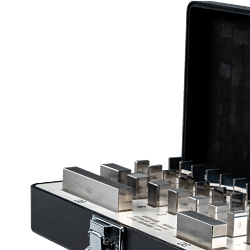
Precision gauge blocks, also known as calibration blocks, are measuring tools used to calibrate and verify the accuracy of other measuring instruments. Made of hardened steel, ceramic or tungsten carbide, these blocks are ground to extremely tight tolerances, often in the order of a few microns. Their surface is perfectly flat and parallel, making them ideal for high-precision measurements.
Use of precision gauge blocks in machine shops
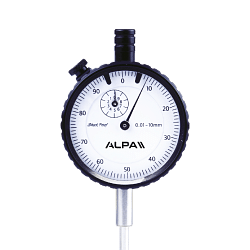
In machine shops, precision gauge blocks are mainly used to calibrate measuring instruments such as gauges, micrometers and dial gauges. Their function is to provide a known, highly accurate length reference against which measuring instruments can be compared and adjusted. This calibration process is essential to ensure that measurements taken during production are accurate and meet the required specifications.
Advantages of using precision gauge blocks
The use of precision gauge blocks offers several advantages. Firstly, they guarantee a high degree of accuracy and repeatability in measurements, minimising measurement errors. Furthermore, thanks to their robust construction and resistance to wear, precision gauge blocks have a long service life, making them a worthwhile investment for machine shops. Finally, their versatility makes them suitable for a wide range of applications, from calibrating measuring instruments to checking the flatness and parallelism of surfaces.
Materials and construction of precision gauge blocks
Precision gauge blocks are available in different materials, each with its own characteristics and advantages. Hardened steel blocks are the most common and offer a good balance between cost and performance. However, for applications requiring greater resistance to wear and corrosion, ceramic or tungsten carbide blocks may be a better choice. These materials offer greater dimensional stability and superior strength, making them ideal for demanding work environments.
Frequently Asked Questions about Precision Matching Blocks
1. How are precision striker blocks maintained?
Maintenance of precision gauge blocks is essential to ensure their longevity and accuracy. It is important to clean them regularly with a soft, dry cloth to remove dust and debris. It is also advisable to store them in a dry, moisture-free environment to prevent corrosion.
2. How often should precision gauge blocks be calibrated?
The frequency of calibration depends on use and the working environment. However, it is generally advisable to calibrate annually to ensure that the blocks maintain their accuracy.
3. What is the difference between steel and ceramic precision gauge blocks?
Steel blocks are cheaper and offer good wear resistance, but can be subject to corrosion. Ceramic blocks, on the other hand, offer greater corrosion resistance and superior dimensional stability, but are more expensive.
Conclusion
Precision gauge blocks are indispensable tools in machine shops, ensuring that measurements are accurate and reliable. Their ability to calibrate measuring instruments with millimetre accuracy makes them a fundamental pillar in the mechanical production process. Investing in high quality gauge blocks and maintaining them correctly can make the difference between a successful end product and one that fails to meet expectations. In an industry where precision is everything, precision striker blocks are an essential investment for any machine shop striving for excellence.
Read More Read Less