An introduction to carpenters’ rulers and set squares
In the world of mechanical workshops and carpentry, precision is essential. The tools used must guarantee accurate and reliable measurements to ensure that every project is completed to the highest standard. Among these tools, carpenters’ rulers and set squares play a crucial role. These tools not only facilitate the day-to-day work of professionals, but also improve the efficiency and precision of operations. In this article, we will explore in detail what carpenters’ rulers and set squares are, what they are used for, how to use them, the benefits of using them, and we will answer the most frequently asked questions about these essential tools.
Understanding carpenters’ rulers
Carpenter’s rulers are linear measuring tools used to draw straight lines and measure distances on various materials. Usually made of metal or wood, carpenters’ rulers come in various lengths and feature graduated scales to make it easier to read measurements. Their precision is crucial to ensuring that the lines drawn are perfectly straight, an essential requirement in many carpentry projects.
Carpenter’s rulers are used in a wide range of applications, from furniture making to the construction of timber structures. Their versatility makes them an indispensable tool in any workshop. Furthermore, modern rulers may feature additional features, such as built-in spirit levels, which further enhance their usefulness.
Exploring carpenters’ set squares
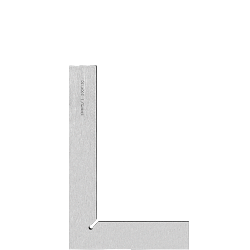
Carpenter’s squares are angular tools used to check and mark out precise angles. They are essential for ensuring that angles are perfectly right, a critical aspect in the construction of stable and safe structures. Set squares come in various shapes, including T-squares, L-squares and adjustable set squares, each designed for specific applications.
T-squares are particularly useful for marking out perpendicular lines, whilst L-squares are ideal for checking 90-degree angles. Adjustable set squares offer greater flexibility, allowing custom angles to be set for more complex projects. Choosing the right set square depends on the specific requirements of the project and the carpenter’s personal preferences.
Using carpenters’ rulers and set squares
The correct use of carpenters’ rulers and set squares is essential for achieving precise and professional results. When using a ruler, it is important to ensure that it is positioned firmly against the material and that the scale is clearly visible. This allows you to draw straight lines and measure distances accurately.
As for set squares, it is essential to position them correctly to ensure that angles are accurate. T-squares must be aligned with the edge of the material, whilst L-squares must be positioned so that both sides are in contact with the adjacent surfaces. Adjustable squares require particular care to set the desired angle before use.
Advantages of using carpenters’ rulers and squares
The use of carpenters’ rulers and squares offers numerous advantages that improve the quality and efficiency of the work. Firstly, these tools ensure superior precision, minimising measurement and marking errors. This results in savings in both time and materials, as it reduces the need for corrections and rework.
Furthermore, the use of carpenters’ rulers and set squares improves workplace safety. Structures and components built using accurate measurements are more stable and secure, reducing the risk of accidents. Finally, these tools are easy to use and require minimal maintenance, making them a long-lasting and cost-effective investment for any workshop.
Frequently asked questions about carpenters’ rulers and set squares
What materials are used to make carpenters’ rulers and set squares?
Carpenters’ rulers and set squares are generally made of metal, such as steel or aluminium, or of wood. Metal offers greater durability and precision, whilst wood is lightweight and easy to handle.
How do you maintain the accuracy of carpenters’ rulers and set squares?
To maintain accuracy, it is important to clean the rulers and set squares regularly and store them in a dry place. Avoid exposing them to knocks or drops that could damage them.
What are the differences between T-squares and L-squares?
T-squares are designed for drawing perpendicular lines, whilst L-squares are used to check 90-degree angles. Both are essential for ensuring the accuracy of angles.
Can I use rulers and set squares on materials other than wood?
Yes, rulers and set squares can be used on a variety of materials, including metal, plastic and composites, provided they are suitable for the type of material and its features.
How do I choose the right length of a carpenter’s ruler?
The length of the ruler depends on the size of the project. For larger jobs, it is advisable to use longer rulers to cover greater distances with a single measurement.
Are adjustable set squares as accurate as fixed ones?
Adjustable set squares can be just as accurate as fixed ones, provided they are correctly set and locked in place before use.
What additional features do modern rulers have?
Modern rulers may include features such as built-in spirit levels, metric and imperial scales, and non-slip surfaces to improve accuracy and ease of use.
Can rulers and set squares be used for outdoor construction projects?
Yes, rulers and set squares can be used for outdoor projects, but it is important to choose weather-resistant tools and store them properly to prevent damage.
How can I improve my skills in using rulers and set squares?
Regular practice and attention to detail are key to improving your skills in using rulers and set squares. Taking training courses and working with experienced professionals can be helpful.
What are the alternatives to traditional rulers and set squares?
Alternatives include digital tools such as laser levels and digital calipers, which offer precise measurements and can be used in combination with traditional rulers and set squares for greater versatility.Read More Read Less