< Hand tools Open end wrenches
An introduction to open end wrenches: essential tools for engineering workshops
Open end wrenches are among the most fundamental and versatile tools in mechanical workshops. Known for their simplicity and effectiveness, these tools are indispensable for a wide range of applications, from the maintenance of industrial machinery to vehicle repairs. In this article, we will explore in detail what open end wrenches are, how they are used, the benefits they offer, and we will answer the most frequently asked questions about this essential tool.
What are open end wrenches?
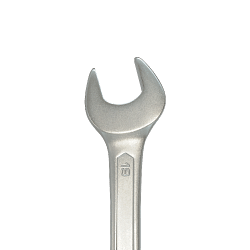
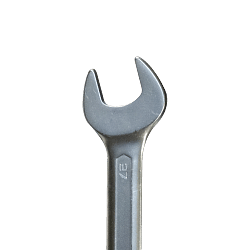
Open end wrenches are hand tools designed to tighten or loosen nuts and bolts. They feature a U-shaped head that fits perfectly around the sides of a nut or bolt. This shape allows a significant amount of force to be applied without damaging the fastener. Open end wrenches are available in a variety of sizes to suit different nut and bolt standards, making them extremely versatile.
Use of open end wrenches in mechanical workshops
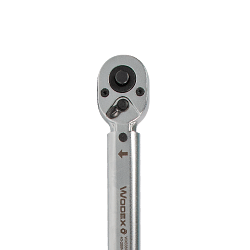
In mechanical workshops, open end wrenches are used for a wide range of tasks. They are particularly useful when working in confined spaces where other tools might not be effective. Their ability to fit different sizes of nuts and bolts makes them ideal for maintenance and repair work on complex machinery. Furthermore, open end wrenches are often used in combination with other tools, such as torque spanners, to ensure precise tightening.
Advantages of open end wrenches
One of the main advantages of open end wrenches is their simplicity. They require no power source and are easy to use, even for those with little experience. Their robust construction makes them durable and capable of withstanding harsh working conditions. Furthermore, their versatility makes them suitable for a wide range of applications, reducing the need for specialised tools. Finally, open end wrenches are generally more economical than other tightening tools, making them a cost-effective choice for mechanical workshops.
How to choose the right open end wrench
Choosing the right open end wrench is essential to ensure efficient and safe work. It is important to consider the size of the nut or bolt you will be working on, as an open end wrench that is too large or too small could damage the fastener. Furthermore, it is advisable to opt for spanners made from high-quality materials, such as chrome-vanadium steel, which offer greater strength and durability. Finally, assessing the length of the spanner can be useful in determining the leverage required to apply the desired force.
Maintenance and care of open end wrenches
To ensure that open end wrenches have a long service life, regular maintenance is essential. After each use, it is advisable to clean the wrenches to remove dirt and residue that could cause corrosion. Furthermore, it is important to store the wrenches in a dry, sheltered place to prevent rust from forming. Finally, check the spanners periodically for any signs of wear or damage and replace them if necessary to ensure safety during use.
Frequently asked questions about open end wrenches
What is the difference between an open end wrench and an adjustable open end wrench?
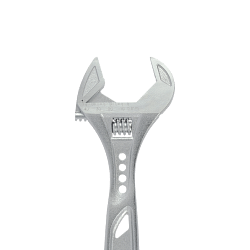
Open end wrenches have a U-shaped head, whilst adjustable open end wrenches have an adjustable head that can fit different sizes of nuts and bolts.
Are open end wrenches suitable for precision work?
Yes, open end wrenches can be used for precision work, especially when combined with measuring tools such as torque spanners.
What materials are used to make open end wrenches?
Open end wrenches are generally made from chrome-vanadium steel, known for its strength and durability.
How do you measure the size of an open end wrench?
The size of an open end wrench is determined by the distance between the two ends of the U-shaped head.
Can open end wrenches be used on rusty nuts and bolts?
Yes, but it is important to apply even pressure to avoid damaging the fastener. Using lubricants can make the process easier.
What is the ideal length for an open end wrench?
The ideal length depends on the specific application. Longer spanners offer greater leverage, whilst shorter ones are ideal for confined spaces.
Are open end wrenches suitable for professional use?
Absolutely yes; open end wrenches are widely used in professional settings thanks to their versatility and reliability.
How can you prevent rust on open end wrenches?
Storing the spanners in a dry place and cleaning them regularly helps to prevent rust from forming.
Can a damaged open end wrench be repaired?
Generally speaking, it is not advisable to repair a damaged open end wrench, as this could compromise safety. It is best to replace it.
What are the most common sizes of open end wrenches?
The most common sizes range from 6 mm to 32 mm, covering a wide range of applications.Read More Read Less