< Clamping systems Motorised tool holders
An introduction to motorised tool holders: an innovation for machine shops
In the world of machine shops, efficiency and precision are key to ensuring the quality of work and customer satisfaction. Motorised tool holders represent one of the most significant innovations in this sector, offering an advanced solution to improve machining operations. These tools are designed to optimise the production process, reducing machining times and increasing the precision of operations. In this article, we will explore in detail what motorised tool holders are, what they are used for, how they are used and what benefits they offer to machine shops.
Understanding motorised tool holders: definition and operation
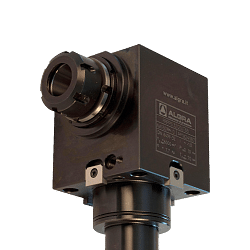
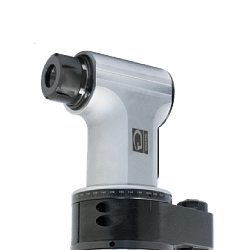
Motorised tool holders are mechanical devices that incorporate a motor to drive cutting or machining tools. Unlike traditional tool holders, which require manual intervention to move the tools, motorised tool holders use a motor to provide the necessary movement, thereby improving the precision and speed of operations. These tools are commonly used in machine tools such as lathes and machining centres, where precision and speed are essential.
The operation of motorised tool holders is based on a transmission system that connects the motor to the tool. This system may consist of gears, belts or other transmission mechanisms that allow the motor to transfer motion to the tool. The speed and direction of movement can be precisely controlled, enabling complex operations to be carried out with a high degree of accuracy.
Practical applications of motorised tool holders in machine shops
Motorised tool holders are used in a wide range of machining operations. They are particularly useful in processes requiring high precision and repeatability, such as turning, milling and drilling. Thanks to their ability to operate at high speeds and with precise control, these tools are ideal for the production of complex, high-quality components.
In machine shops, motorised tool holders are often used to machine materials that are difficult to cut, such as alloy steels and titanium alloys. The ability to maintain a constant speed and apply uniform force to the tool reduces tool wear and improves the quality of the machined surface. Furthermore, the automation of tool movement reduces the need for manual intervention, thereby increasing the safety and efficiency of the production process.
Advantages of motorised tool holders: efficiency and precision for engineering workshops
The adoption of motorised tool holders in machine shops offers numerous advantages. One of the main benefits is increased operational efficiency. Thanks to their ability to operate at high speeds and perform complex operations automatically, motorised tool holders reduce machining times and boost overall productivity.
Another significant advantage is precision. Motorised tool holders allow for precise control of the speed and direction of tool movement, ensuring accurate and repeatable machining. This is particularly important in applications requiring tight tolerances and high-quality surface finishes.
Furthermore, the use of motorised tool holders can reduce tool wear and extend their service life. Precise control of the movement and force applied to the tool reduces the risk of damage and improves machining quality. This translates into savings on tool replacement costs and greater reliability of the production process.
How to use motorised tool holders: a practical guide for machine shops
Using motorised tool holders requires a thorough understanding of their features and how they work. Before you begin, it is important to select the appropriate motorised tool holder for the specific application. This includes choosing the type of motor, the drive system and the tool to be used.
Once the motorised tool holder has been selected, it must be fitted correctly to the machine tool. This process may vary depending on the type of machine and tool holder, but generally involves mounting the device on the machine’s turret or spindle. It is important to follow the manufacturer’s instructions to ensure a safe and correct installation.
After installation, the motorised tool holder can be programmed to carry out the desired operations. This may include setting the speed, direction and sequence of operations. Programming can be carried out manually or using computerised numerical control (CNC) software, depending on the capabilities of the machine tool.
FAQs on motorised tool holders
What are the main types of motorised tool holders available on the market?
There are several types of motorised tool holders, including those with electric, pneumatic and hydraulic motors. The choice depends on the specific requirements of the application.
How does the use of motorised tool holders affect the quality of the final product?
The use of motorised tool holders improves the precision and repeatability of operations, ensuring a higher quality end product.
What are the maintenance requirements for motorised tool holders?
Maintenance of motorised tool holders includes regular lubrication, checking for tool wear and verifying that the motor and drive system are functioning correctly.
Can motorised tool holders be used on all machine tools?
Not all machine tools are compatible with motorised tool holders. It is important to check compatibility with the machine manufacturer.
What factors should be considered when choosing a motorised tool holder?
Factors to consider include the type of motor, load capacity, maximum speed and compatibility with the machine tool.
How can tool life be improved by using motorised tool holders?
Precise control of movement and the force applied reduces tool wear, thereby improving tool life.
What are the common challenges when implementing motorised tool holders?
Common challenges include selecting the appropriate tool holder, ensuring correct installation and programming the operations.
What are the economic benefits of using motorised tool holders?
The economic benefits include reduced machining times, savings on tool replacement costs and increased productivity.
How does the automation of motorised tool holders affect operational safety?
Automation reduces the need for manual intervention, thereby improving operational safety and reducing the risk of accidents.
What are the future trends in the range of motorised tool holders?
Future trends include the integration of advanced technologies such as artificial intelligence and the Internet of Things to further improve efficiency and precision.Read More Read Less