< Abrasives Diamond files
Professional diamond files are an essential tool for machine shops and all industries that require precision and quality in the processing of materials. Thanks to their composition and the advanced technology with which they are made, these tools offer a number of advantages that make them indispensable for those working in precision mechanics.
What are professional diamond files
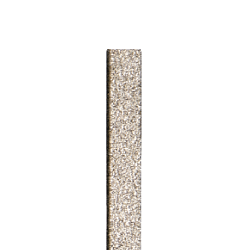
Professional diamond files are abrasive tools used for machining metal and non-metal surfaces. Their main characteristic is the presence of synthetic diamond particles on the surface, which gives them superior cutting capacity and wear resistance compared to conventional files. Diamond, being the hardest known material, allows a high quality finish to be obtained even on particularly hard and resistant materials.
Use of diamond files in machine shops
In machine shops, diamond files are used in a wide range of applications. They are used for finishing metal components, removing burrs, preparing surfaces for welding and machining composite materials. Their versatility makes them suitable for working on hardened steels, titanium alloys, ceramics and advanced composite materials.
Advantages of professional diamond files
One of the main advantages of diamond files is their durability. Thanks to the strength of the diamond, these files maintain their cutting capacity for a significantly longer period of time than conventional files. This translates into greater operational efficiency and reduced tool replacement costs.
In addition, diamond files offer superior machining precision. The even distribution of diamond particles on the surface ensures a constant and uniform cutting action, reducing the risk of damaging the workpiece. This is especially important in applications where precision is crucial, such as in the production of components for the aerospace or automotive industries.
How to choose the right diamond file
Choosing the right diamond file depends on several factors, including the type of material to be machined, the desired finish and the specific requirements of the application. It is important to consider the grit of the diamond, which determines the cutting capacity and surface finish. Coarse-grained files are ideal for quick removal of material, while fine-grained files are more suitable for finishing and polishing.
Maintenance and care of diamond files
To ensure the long life and optimum performance of diamond files, it is essential to follow some simple maintenance practices. After each use, it is advisable to clean the file to remove residual material and prevent the accumulation of debris that could compromise the tool's effectiveness. In addition, it is important to store files in a dry and protected environment to prevent corrosion.
Frequently asked questions about diamond files
1. What is the difference between diamond files and conventional files?
Diamond files use synthetic diamond particles for the cutting action, offering greater durability and precision than traditional files, which are made of hardened steel.
2. Can they be used on non-metallic materials?
Yes, diamond files are also suitable for working on non-metallic materials such as ceramics and composite materials.
3. How should diamond files be cleaned?
It is advisable to use a soft brush or cloth to remove material residues after use, avoiding the use of aggressive solvents that could damage the diamond surface.
4. How long do diamond files last?
The lifetime depends on use and maintenance, but in general, diamond files last significantly longer than conventional files due to the strength of the diamond.
5. What are the most common applications of diamond files?
Diamond files are commonly used for finishing metal components, removing burrs, preparing surfaces for welding and machining composite materials.
In conclusion, professional diamond files are a valuable investment for machine shops and all sectors that require precision and quality in the machining of materials. Their ability to offer a high quality finish, combined with their durability and versatility, makes them an indispensable tool for those working in precision mechanics.
Read More Read Less