An introduction to flap discs and centre-drilled grinding wheels
In the world of machine shops, efficiency and precision are key to ensuring the quality of the work carried out. Among the most commonly used tools for achieving perfectly smooth and finished surfaces, flap discs and centre-drilled grinding wheels play a prominent role. Thanks to their versatility and ability to adapt to different surfaces, these tools are indispensable for those working in the metalworking sector and beyond.
What are flap discs and centre-drilled abrasive wheels?
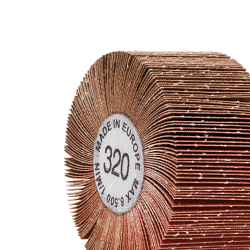
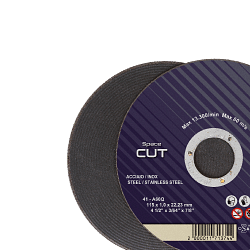
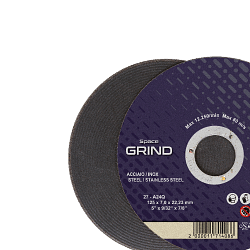
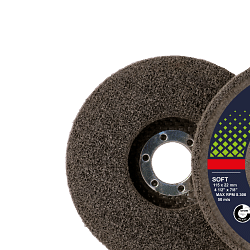
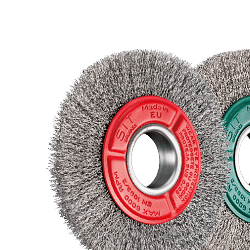
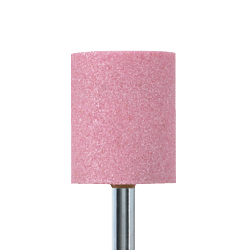
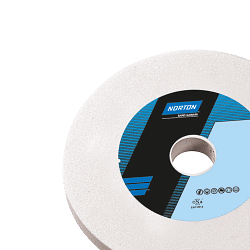
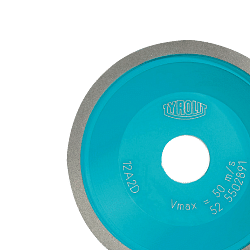
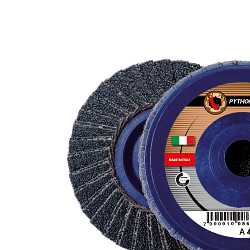
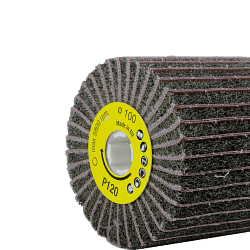
Flap discs and centre-drilled abrasive wheels are tools designed for finishing and smoothing metallic and non-metallic surfaces. Flap discs consist of a series of abrasive flaps arranged radially around a central core. These flaps, made from high-quality abrasive materials, allow work to be carried out on uneven surfaces that are difficult to reach with other tools. Hole-centred abrasive wheels, on the other hand, are abrasive discs fitted with a central hole that allows them to be mounted on machine tools. These wheels are ideal for deburring, sanding and finishing flat and curved surfaces.
Use and applications of flap discs and centre-drilled abrasive wheels
Flap discs and centre-drilled abrasive wheels are widely used across various industrial sectors. In engineering workshops, these tools are used for deburring, smoothing welded surfaces and preparing surfaces for painting. Thanks to their ability to adapt to complex surfaces, flap discs are particularly valued for machining tubes, profiles and components with irregular geometries. Hollow-core abrasive wheels, on the other hand, are used for finishing operations on flat and curved surfaces, ensuring a high and consistent finish.
Advantages of flap-type abrasive rolls and centre-drilled abrasive wheels
The use of flap-type abrasive rollers and centre-drilled abrasive wheels offers numerous advantages. Firstly, their versatility allows them to be used for a wide range of applications, reducing the need for specific tools for each type of machining operation. Furthermore, the quality of the abrasive materials used ensures a long service life for the tools, reducing replacement and maintenance costs. Another significant advantage is these tools’ ability to work on complex and hard-to-reach surfaces, improving the efficiency and precision of finishing operations.
How to choose the right flap discs and centre-drilled abrasive wheels for your needs
Choosing the flap discs and centre-drilled abrasive wheels best suited to your needs depends on several factors. Firstly, it is important to consider the type of material to be worked on and the desired finish. For harder materials, it is advisable to opt for abrasives with a coarser grit, whilst for delicate surfaces it is preferable to use fine-grit abrasives. Furthermore, it is essential to assess the compatibility of the tools with the machine tools available in the workshop, ensuring that the bore diameter of the abrasive wheels is compatible with the machine spindles.
Maintenance and care of flap discs and hole-drilled abrasive wheels
To ensure a long service life and optimal performance of flap discs and centre-drilled abrasive wheels, it is essential to follow certain maintenance and care practices. After each use, it is advisable to clean the tools thoroughly to remove any residual material and abrasive dust. Furthermore, it is important to regularly check the condition of the flaps and abrasive surfaces, replacing any worn or damaged tools. Finally, it is essential to store the rolls and wheels in a dry, moisture-free environment to prevent rust formation and the deterioration of the abrasive materials.
Frequently asked questions about flapped abrasive rolls and abrasive wheels with a centre hole
What are the most common materials used for abrasive flaps?
Abrasive flaps are commonly made from aluminium oxide, silicon carbide and zirconium, materials known for their strength and abrasive properties.
How are centre-mounted abrasive wheels fitted to machine tools?
Hole-type abrasive wheels are mounted on the spindles of machine tools using clamping flanges, which ensure stability and safety during use.
What is the difference between abrasive flap rolls and centre-drilled abrasive wheels?
Abrasive flap rolls consist of flaps arranged radially, whilst centre-holed abrasive wheels are abrasive discs with a central hole for mounting.
Can they be used on non-metallic materials?
Yes, flap discs and centre-drilled abrasive wheels can be used on non-metallic materials such as wood and plastic, depending on the type of abrasive.
What safety precautions should be taken during use?
It is important to wear personal protective equipment such as safety goggles and gloves, and to ensure that the tools are fitted correctly and in good condition.
How do you choose the right grit for a specific application?
The choice of grit depends on the material being worked on and the desired finish; coarser grits for rapid removal, finer grits for smooth finishes.
What are the signs of wear on flap discs?
Signs of wear include reduced abrasive effectiveness, loss of flaps and the presence of uneven or damaged surfaces.
Can worn flap discs be reconditioned?
In some cases, it is possible to recondition the rolls by replacing the worn flaps, but it is often more cost-effective to replace the entire tool.
What are the most common applications in machine shops?
Common applications include deburring, smoothing welded surfaces and preparing surfaces for painting.
How should abrasive rolls and wheels be stored correctly?
Store them in a dry environment, away from moisture and corrosive agents, to prevent rust and deterioration of the abrasive materials.Read More Read Less