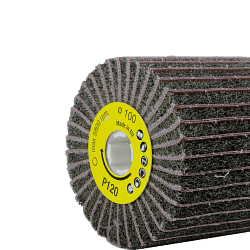
< Abrasives Abrasive spiral bands
Professional abrasives are a key element in the machining landscape, offering advanced solutions for surface finishing and preparation. These tools, although often underestimated, play a crucial role in ensuring the quality and efficiency of production processes. In this in-depth look, we will explore in detail what abrasive rings are, how they are used in machine shops, the advantages they offer and answer some of the most frequently asked questions on this topic.
Understanding professional abrasive rings
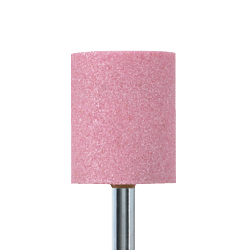
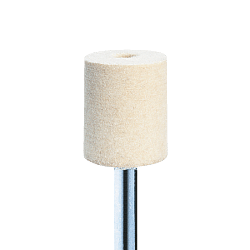
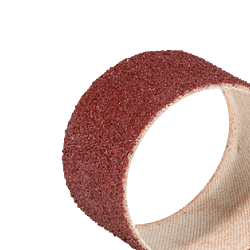
Abrasive rings are finishing tools consisting of a flexible backing coated with abrasive grains. These grains can be of different materials, such as aluminium oxide, silicon carbide or zirconium, each of which offers unique properties for specific applications. The abrasive grains are designed to be mounted on spindles or rotating tools, allowing for precise and uniform machining of surfaces.
Applications and use in machine shops
In machine shops, abrasive rings are used in a wide range of applications, from removing excess material to surface finishing. They are particularly useful for working on metals, alloys, plastics and other composite materials. Their versatility makes them ideal for deburring, sanding, polishing and preparing surfaces for further treatment, such as painting or plating.
Advantages of professional abrasive rings
One of the main advantages of abrasive rings is their ability to adapt to irregular surfaces, guaranteeing a uniform finish even on complex geometries. In addition, the variety of grits available allows the selection of the most suitable abrasive for each stage of the machining process, thus optimising production time and costs. The abrasive rings also offer long life and wear resistance, reducing the need for frequent replacement and maintenance.
Selecting the right abrasive ring
The choice of the right abrasive ring depends on several factors, including the material to be processed, the type of finish desired and the specifications of the machine used. It is important to consider the size and grit of the abrasive, as well as the speed of rotation and pressure applied during use. Careful selection ensures not only efficient machining, but also greater operational safety.
Frequently asked questions about abrasive rings
1. What is the difference between an abrasive ring and an abrasive disc?
Abrasive rings are designed to be mounted on spindles and are ideal for working on uneven surfaces, whereas abrasive discs are generally used on flat surfaces and are mounted on angle grinders.
2. How do I determine the right grit for an abrasive ring?
The choice of grit depends on the desired level of finish. Coarser grits are suitable for material removal, while finer grits are ideal for polishing and finishing.
3. Can abrasive rings be used on non-metallic materials?
Yes, abrasive rings are versatile and can be used on a variety of materials, including plastic, wood and composite materials.
4. What safety precautions should be followed when using abrasive rings?
It is essential to wear personal protective equipment, such as safety goggles and gloves, and ensure that the equipment is properly mounted and maintained.
5. How do I prolong the life of an abrasive ring?
To prolong the life of an abrasive ring, it is important to use it at the correct speed and pressure, avoid overheating, and store it in a clean, dry environment.
Conclusions
Professional abrasive rings are indispensable tools in machine shops, offering versatile and efficient solutions for a wide range of applications. Their ability to adapt to different surfaces and materials makes them an excellent choice for improving the quality and efficiency of production processes. With careful selection and proper use, abrasive rings can contribute significantly to the success of machining operations.
Read More Read Less