< Lifting systems Vacuum tube lifters
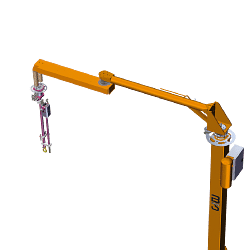
Professional vacuum lifters are an advanced and indispensable solution for modern machine shops. These tools, known for their efficiency and versatility, are designed to facilitate the lifting and handling of heavy and bulky loads, minimising physical effort and increasing safety in the workplace. In this in-depth look, we will explore in detail what vacuum lifters are, how they work, their advantages and practical applications in machine shops.
Understanding vacuum lifters
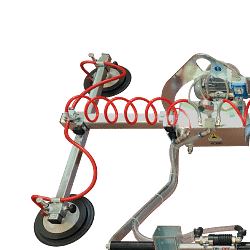
Vacuum lifters, also known as vacuum lifters, use vacuum technology to lift and move objects. The principle of operation is based on creating a pressure difference between the air inside a vacuum and the air outside. When the air is removed from the suction cup, a vacuum is created that generates a lifting force, allowing the lifter to adhere firmly to the surface of the object to be lifted.
These devices are particularly effective for lifting materials with smooth, non-porous surfaces, such as glass, metal and plastic. However, there are also vacuum lifters designed to handle uneven or porous surfaces, thanks to the use of special seals and advanced technology.
Applications in machine shops
In machine shops, vacuum lifters are used in a wide range of applications. They are used to lift and position heavy components during assembly, to move raw or semi-finished materials and to facilitate maintenance and repair operations. Their ability to lift loads without damaging surfaces makes them ideal for handling delicate or finished components.
Advantages of vacuum lifters
The adoption of vacuum lifters in machine shops offers numerous advantages. Firstly, they improve safety at work by reducing the risk of accidents associated with manual lifting of heavy loads. They also increase operational efficiency, allowing materials to be moved quickly and accurately, reducing downtime and increasing overall productivity.
Another significant benefit is the reduction in physical effort required of operators, which can lead to a decrease in fatigue and an improvement in workers' general well-being. In addition, vacuum lifters are often equipped with intuitive and easy-to-use control systems that require minimal training to operate.
How to choose the right vacuum lifter
The choice of the most suitable vacuum lifter depends on several factors, including the type of materials to be lifted, the maximum weight of the loads, the size of the surfaces and the environmental conditions of the workshop. It is also important to consider frequency of use and specific operational requirements.
For workshops that handle a variety of materials, it may be advantageous to opt for vacuum lifters with interchangeable or adjustable suction cups, which offer greater flexibility. In addition, it is essential to assess the quality and reliability of the vacuum system, as a stable and powerful vacuum is crucial for safe and efficient performance.
Maintenance and care of vacuum lifters
To ensure the longevity and efficiency of vacuum lifters, it is essential to follow a regular maintenance programme. This includes cleaning suction cups to remove dust and debris, checking seals to prevent vacuum leaks and periodically checking mechanical and electrical components.
It is also advisable to train personnel on the correct and safe use of vacuum lifters to prevent accidental damage and ensure optimal operation. Proper maintenance not only prolongs the life of the device, but also helps to maintain high standards of safety and productivity.
Answers to frequently asked questions
1. Can vacuum lifters lift any kind of material?
Vacuum lifters are most effective on materials with smooth, non-porous surfaces. However, there are models designed to handle uneven or porous surfaces.
2. What is the typical lifting capacity of a vacuum lifter?
Lifting capacity varies depending on the model and technical specifications. It is important to choose a lift that meets the specific needs of the application.
3. Do vacuum lifters require frequent maintenance?
Regular maintenance is essential to ensure optimal performance and safety. This includes cleaning the suction cups and checking the seals.
4. Is special training required to use vacuum lifters?
Although vacuum lifters are generally easy to use, it is advisable to provide basic training to ensure safe and efficient use.
5. What are the main advantages of vacuum lifters over other lifting methods?
Vacuum lifts offer greater safety, efficiency and reduced physical effort than manual lifting or other mechanical methods.
In conclusion, professional vacuum lifters are a valuable resource for machine shops, offering safe, efficient and versatile lifting solutions. Their adoption can lead to significant improvements in productivity, safety and worker well-being, making them a strategic investment for any industrial operation.
Read More Read Less