An introduction to vacuum lifters: an innovative solution for mechanical workshops
In the world of mechanical workshops, efficiency and safety are two fundamental aspects for ensuring optimal operations. Vacuum lifters represent an innovative solution that meets these needs, offering a safe and reliable method for handling heavy and bulky materials. In this article, we will explore in detail what vacuum lifters are, how they work, their advantages and their practical applications in mechanical workshops.
What are vacuum lifters?
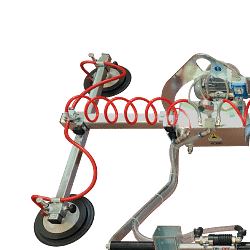
Vacuum lifters are devices designed to lift and move loads using vacuum force. These tools exploit the pressure difference between the outside air and the air inside a suction cup to create a lifting force. The suction cup adheres firmly to the surface of the load, allowing it to be lifted and moved with ease. This method is particularly useful for materials with smooth, non-porous surfaces, such as glass, metal and plastic.
How do vacuum lifters work?
The operation of vacuum lifters is based on a simple yet effective physical principle: the creation of a partial vacuum. When the suction cup is positioned on the load, a pump draws air out of the suction cup, reducing the internal pressure. As the external atmospheric pressure is higher, it presses the suction cup against the load, creating sufficient adhesive force to lift the object. This system is controlled by valves and sensors that ensure safe and precise operation.
Advantages of vacuum lifters in mechanical workshops
The use of vacuum lifters in mechanical workshops offers numerous advantages. Firstly, they improve workplace safety by reducing the risk of accidents associated with the manual handling of heavy loads. Furthermore, they increase operational efficiency, allowing materials to be moved quickly without the need for bulky equipment. Vacuum lifters are also versatile, adapting to loads of various shapes and sizes, and minimise damage to materials thanks to their gentle gripping action.
Practical applications of vacuum lifters
In engineering workshops, vacuum lifters are used in a variety of operations. They are ideal for lifting sheet metal, glass panels and plastic components. Furthermore, they can be used for complex assembly tasks where components need to be positioned with precision. Their ability to adapt to uneven surfaces makes them particularly useful in large-scale production environments, where flexibility and speed are essential.
Maintenance and safety of vacuum lifters
To ensure vacuum lifters operate safely and at their best, regular maintenance is essential. This includes checking the suction cups for any damage or wear, inspecting the pumps and valves, and ensuring that the sensors are working correctly. Furthermore, it is important to train staff in the correct use of the lifters to prevent accidents and ensure a safe working environment.
Technological innovations in vacuum lifters
In recent years, vacuum lifters have benefited from significant technological innovations. The integration of advanced electronic control systems has improved the precision and safety of operations. Furthermore, the use of lightweight yet durable materials has increased the devices’ lifespan and energy efficiency. These innovations make vacuum lifters an increasingly popular choice in modern mechanical workshops.
Economic considerations regarding the use of vacuum lifts
Investing in vacuum lifts can represent a significant upfront cost for a mechanical workshop. However, the long-term benefits, such as reduced processing times and lower costs associated with workplace accidents, can more than offset the initial investment. Furthermore, increased operational efficiency can lead to higher productivity and, consequently, higher profits.
FAQs on vacuum lifts
What materials can be lifted using vacuum lifters?
Vacuum lifters are ideal for materials with smooth, non-porous surfaces, such as glass, metal and plastic.
Are vacuum lifters safe to use?
Yes, when used correctly and with regular maintenance, vacuum lifters are safe and reduce the risk of workplace accidents.
What is the lifting capacity of a vacuum lifter?
The lifting capacity varies depending on the model and the device’s specifications, but can be as high as several tonnes.
Can vacuum lifters damage materials?
No, thanks to their gentle gripping action, vacuum lifters reduce the risk of damage to materials.
Is specific training required to use vacuum lifters?
Yes, it is advisable to train staff in the correct use of vacuum lifters to ensure safe and efficient operations.
What are the maintenance costs for vacuum lifters?
Maintenance costs vary depending on the model and usage, but generally include replacing the suction cups and checking the pumps and valves.
Can vacuum lifters be used outdoors?
Yes, many models are designed for use both indoors and outdoors, provided the environmental conditions are suitable.
What are the alternatives to vacuum lifters?
Alternatives include cranes, forklift trucks and other mechanical lifting equipment, but vacuum lifters offer unique advantages in terms of safety and versatility.
How do I choose the right vacuum lifter for my workshop?
The choice depends on your specific operational requirements, such as the type of materials to be lifted, the required load capacity and the working environment.
Are vacuum lifters suitable for use in hazardous environments?
Yes, there are models designed to operate in hazardous environments, with advanced safety features to prevent accidents.Read More Read Less