Register and use the discount code NEWWELCOME to get 10% off on your first purchase. GET DISCOUNT.
Register and use the discount code NEWWELCOME to get 10% off on your first purchase. GET DISCOUNT.
Register and use the discount code NEWWELCOME to get 10% off on your first purchase. GET DISCOUNT.
Free shipping in 24h from 200€
Catalogues
Customer service
How can we help you?
- Faq
- Customer service
+31(0)85-0471271
- Supporting big orders
02.38298620
-
info@linkindustrialtools.nl
- Request assistance with form
Or contact us with the chat in the lower right corner






Toggle Nav 


< Lifting systems
In the world of mechanical workshops, efficiency and safety are two fundamental pillars for ensuring successful operations. Among the tools that help achieve these objectives, lifting beams play a prominent role. These devices, which are often underestimated, are essential for lifting and handling heavy loads in a safe and controlled manner. In this article, we will explore in detail what lifting beams are, what they are used for, how they are used, the benefits they offer, and we will answer the most frequently asked questions on this topic.
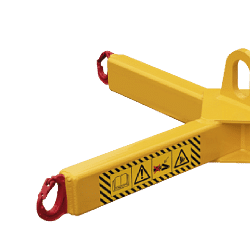
Lifting beams are mechanical devices designed to distribute the weight of a load evenly during lifting. They consist of a horizontal bar, often made of high-strength steel, fitted with hooks or other fastening devices at each end. These tools are used in conjunction with cranes or other lifting systems to ensure that the load remains stable and balanced during movement.
Lifting beams are mainly used to lift and move heavy and bulky loads that cannot be easily handled using traditional methods. They are particularly useful in situations where the load must be kept in a horizontal position or where the weight needs to be distributed evenly to prevent damage to the load itself or to the lifting equipment. These devices are widely used in sectors such as manufacturing, construction, logistics and, of course, in mechanical workshops.
Using lifting beams requires a certain level of skill and care to ensure the safety and effectiveness of operations. First and foremost, it is essential to select the appropriate spreader bar based on the weight and dimensions of the load to be lifted. Once the correct spreader bar has been chosen, it must be securely attached to the load using hooks or other fastenings. It is important to ensure that the load is well balanced and that the lifting points are properly distributed along the spreader bar. Finally, the spreader bar must be connected to the lifting system, such as a crane, and the load can then be lifted carefully.
The use of lifting beams in mechanical workshops offers numerous advantages. Firstly, they improve safety by reducing the risk of accidents when lifting heavy loads. Thanks to their ability to distribute weight evenly, lifting beams reduce stress on the lifting points, minimising the risk of damage to both the load and the equipment. Furthermore, they allow large loads to be lifted in confined spaces, improving operational efficiency. Finally, the use of lifting beams can reduce machine downtime, thereby increasing the workshop’s overall productivity.
What are the most common materials used for lifting beams?
Lifting beams are generally made from high-strength steel, but they can also be manufactured from aluminium or other lightweight materials for specific applications.
How is the load capacity of a lifting beam determined?
The load capacity of a lifting beam is determined by its design and the materials used. It is important to consult the manufacturer’s specifications to ensure that the beam is suitable for the load to be lifted.
What are the safety regulations for the use of lifting beams?
The use of lifting beams is governed by specific safety regulations which vary depending on the country and sector. It is essential to follow these regulations to ensure safe operations.
Can a lifting beam be used for irregular loads?
Yes, lifting beams can be used for irregular loads, but it is important to ensure that the load is well balanced and that the lifting points are properly distributed.
What are the differences between a fixed lifting beam and an adjustable one?
A fixed lifting beam has a predefined length and configuration, whilst an adjustable lifting beam can be adapted to lift loads of different sizes and shapes.
How do you maintain a lifting beam?
Maintenance of a lifting beam includes regular inspection to check for any signs of wear or damage, lubricating moving parts and checking that the fastenings are working correctly.
What are the signs of wear and tear on a lifting beam?
Signs of wear and tear on a lifting beam may include cracks, deformation, corrosion or damage to the hooks and fastenings. It is important to replace damaged lifting beams immediately.
Can a lifting beam be customised to meet specific requirements?
Yes, many manufacturers offer customised lifting beams to meet specific requirements, such as particular dimensions or unique load capacities.
What are the alternatives to lifting beams?
Alternatives to lifting beams include ropes, chains and lifting straps, but each of these options has specific limitations compared to beams.
How do I choose the right lifting beam for my workshop?
To choose the right lifting beam, it is important to consider the type of load to be lifted, the required load capacity, the available space and the applicable safety regulations.Read More Read Less
- Home
- Lifting systems
- Lifting beams
Lifting beams
An introduction to lifting beams: an essential piece of equipment for mechanical workshops
In the world of mechanical workshops, efficiency and safety are two fundamental pillars for ensuring successful operations. Among the tools that help achieve these objectives, lifting beams play a prominent role. These devices, which are often underestimated, are essential for lifting and handling heavy loads in a safe and controlled manner. In this article, we will explore in detail what lifting beams are, what they are used for, how they are used, the benefits they offer, and we will answer the most frequently asked questions on this topic.
What are lifting beams?
Lifting beams are mechanical devices designed to distribute the weight of a load evenly during lifting. They consist of a horizontal bar, often made of high-strength steel, fitted with hooks or other fastening devices at each end. These tools are used in conjunction with cranes or other lifting systems to ensure that the load remains stable and balanced during movement.
What are lifting beams used for?
Lifting beams are mainly used to lift and move heavy and bulky loads that cannot be easily handled using traditional methods. They are particularly useful in situations where the load must be kept in a horizontal position or where the weight needs to be distributed evenly to prevent damage to the load itself or to the lifting equipment. These devices are widely used in sectors such as manufacturing, construction, logistics and, of course, in mechanical workshops.
How are lifting beams used?
Using lifting beams requires a certain level of skill and care to ensure the safety and effectiveness of operations. First and foremost, it is essential to select the appropriate spreader bar based on the weight and dimensions of the load to be lifted. Once the correct spreader bar has been chosen, it must be securely attached to the load using hooks or other fastenings. It is important to ensure that the load is well balanced and that the lifting points are properly distributed along the spreader bar. Finally, the spreader bar must be connected to the lifting system, such as a crane, and the load can then be lifted carefully.
Advantages of lifting beams in mechanical workshops
The use of lifting beams in mechanical workshops offers numerous advantages. Firstly, they improve safety by reducing the risk of accidents when lifting heavy loads. Thanks to their ability to distribute weight evenly, lifting beams reduce stress on the lifting points, minimising the risk of damage to both the load and the equipment. Furthermore, they allow large loads to be lifted in confined spaces, improving operational efficiency. Finally, the use of lifting beams can reduce machine downtime, thereby increasing the workshop’s overall productivity.
Frequently asked questions about lifting beams
What are the most common materials used for lifting beams?
Lifting beams are generally made from high-strength steel, but they can also be manufactured from aluminium or other lightweight materials for specific applications.
How is the load capacity of a lifting beam determined?
The load capacity of a lifting beam is determined by its design and the materials used. It is important to consult the manufacturer’s specifications to ensure that the beam is suitable for the load to be lifted.
What are the safety regulations for the use of lifting beams?
The use of lifting beams is governed by specific safety regulations which vary depending on the country and sector. It is essential to follow these regulations to ensure safe operations.
Can a lifting beam be used for irregular loads?
Yes, lifting beams can be used for irregular loads, but it is important to ensure that the load is well balanced and that the lifting points are properly distributed.
What are the differences between a fixed lifting beam and an adjustable one?
A fixed lifting beam has a predefined length and configuration, whilst an adjustable lifting beam can be adapted to lift loads of different sizes and shapes.
How do you maintain a lifting beam?
Maintenance of a lifting beam includes regular inspection to check for any signs of wear or damage, lubricating moving parts and checking that the fastenings are working correctly.
What are the signs of wear and tear on a lifting beam?
Signs of wear and tear on a lifting beam may include cracks, deformation, corrosion or damage to the hooks and fastenings. It is important to replace damaged lifting beams immediately.
Can a lifting beam be customised to meet specific requirements?
Yes, many manufacturers offer customised lifting beams to meet specific requirements, such as particular dimensions or unique load capacities.
What are the alternatives to lifting beams?
Alternatives to lifting beams include ropes, chains and lifting straps, but each of these options has specific limitations compared to beams.
How do I choose the right lifting beam for my workshop?
To choose the right lifting beam, it is important to consider the type of load to be lifted, the required load capacity, the available space and the applicable safety regulations.