< Workshop equipment Wheels for trolleys
An introduction to trolley wheels: an essential component for industry
Trolley wheels are a fundamental component in the industrial sector, forming an integral part of numerous material-handling devices. These tools are designed to facilitate the transport of materials and products within mechanical workshops and other production environments. Choosing the right wheels can significantly impact operational efficiency, safety and the lifespan of the equipment. In this article, we will explore in detail what trolley wheels are, what they are used for, how they are used and what benefits they offer.
What are trolley wheels and how are they constructed
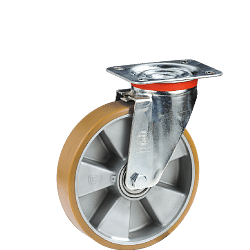
Trolley wheels are mechanical components designed to enable the smooth and safe movement of trolleys and other transport equipment. They generally consist of a central hub, an outer rim and a rubber or polyurethane tread. The hub is usually made of metal to ensure strength and durability, whilst the outer tread is designed to provide grip and reduce wear. The wheels can be fixed or swivelling, depending on specific manoeuvrability requirements.
The importance of trolley wheels in industry
In the context of mechanical workshops, trolley wheels play a crucial role in improving operational efficiency. They enable the rapid and safe transport of heavy materials, reducing the time and effort required to move loads. Furthermore, the use of high-quality wheels can reduce the risk of workplace accidents, improving overall safety in the working environment. Choosing the right wheels can also affect the lifespan of the equipment, reducing wear and the need for maintenance.
How to choose the right trolley wheels for your needs
Selecting the right trolley wheels depends on several factors, including the type of load, the surface on which they will be used and the environmental conditions. It is important to consider the maximum weight the wheels must support, as well as the nature of the floor on which they will be used. Rubber castors are ideal for smooth and delicate surfaces, whilst polyurethane castors offer greater resistance on uneven surfaces. Furthermore, it is essential to assess the castors’ chemical and thermal resistance, particularly in demanding industrial environments.
Benefits of using trolley wheels
Using high-quality trolley wheels offers numerous advantages. Firstly, they improve the manoeuvrability of trolleys, allowing for smoother and more precise movements. This translates into greater operational efficiency and reduced transport times. Furthermore, high-quality wheels reduce wear on contact surfaces, extending the service life of the equipment. Finally, they help to improve workplace safety by reducing the risk of accidents associated with the transport of heavy loads.
Use of trolley wheels in mechanical workshops
In mechanical workshops, trolley wheels are used in a wide range of applications. They are essential for transporting heavy components, equipment and consumables. Furthermore, they facilitate the movement of machinery and tools within the workshop, improving the efficiency of production processes. The use of swivel castors allows for greater flexibility of movement, whilst fixed castors provide stability for heavy loads.
Maintenance and care of trolley wheels
To ensure maximum efficiency and longevity of trolley wheels, regular maintenance is essential. This includes cleaning the wheels to remove debris and dirt that could impair their performance. Furthermore, it is important to periodically check the tread for wear and to replace any damaged or worn-out wheels. Lubricating the bearings can improve smoothness and reduce friction, thereby extending the service life of the wheels.
Innovations in trolley wheel design
In recent years, the design of trolley wheels has seen significant innovations. Manufacturers are developing wheels using advanced materials that offer greater strength and durability. Furthermore, new designs have been introduced that improve manoeuvrability and reduce noise during use. These innovations are helping to improve operational efficiency and safety in mechanical workshops and other industrial environments.
FAQs on trolley wheels
What are the most common materials used for trolley wheels?
The most common materials include rubber, polyurethane and metal, each with specific properties suited to different applications.
How can I determine the load capacity of trolley wheels?
The load capacity is generally specified by the manufacturer and depends on the material and design of the wheel.
What is the difference between fixed and swivel castors?
Fixed castors provide stability and are ideal for linear movement, whilst swivel castors allow for greater manoeuvrability.
How can I reduce wear and tear on trolley wheels?
Carrying out regular maintenance, avoiding overloading and using the wheels on suitable surfaces can reduce wear and tear.
Can trolley wheels be used on any surface?
No, it is important to choose wheels suitable for the type of surface to prevent damage and ensure optimal performance.
What are the signs that trolley wheels need replacing?
Signs of excessive wear, difficulty moving and unusual noises may indicate that they need replacing.
How does temperature affect the use of trolley wheels?
Extreme temperatures can affect the performance of the wheels, so it is important to choose materials suitable for the environment in which they will be used.
Can trolley wheels be customised?
Yes, many manufacturers offer customisation options to meet specific requirements.
What are the advantages of polyurethane wheels compared to rubber ones?
Polyurethane wheels offer greater wear resistance and are ideal for uneven surfaces, whilst rubber wheels offer better grip on smooth surfaces.
How can I improve safety when using trolley wheels?
Ensuring that the wheels are properly maintained, choosing the right type for the application and training staff in their correct use can improve safety.Read More Read Less