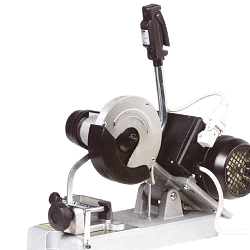
An introduction to drill presses: a mainstay in mechanical workshops
Column drills are an essential tool in mechanical workshops, thanks to their ability to perform precise and repeatable drilling on a wide range of materials. These machines, known for their robustness and reliability, are designed to guarantee high and long-lasting performance, making them indispensable for anyone working in the mechanical engineering sector. In this article, we will explore in detail what column drills are, what they are used for, how to use them, the benefits they offer, and we will answer the most frequently asked questions on this topic.
What are column drills and how do they work
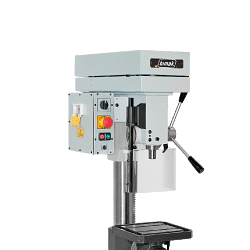
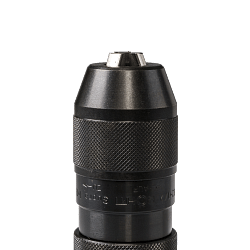
Column drills, also known as vertical column drills, are machine tools designed to perform precise drilling on materials such as metal, wood and plastic. Their structure consists of a solid base, a vertical column, an adjustable table and a drill head. The drill head is fitted with a spindle that holds the drill bit securely in place, allowing holes to be drilled with millimetre precision.
The operation of a column drill is relatively simple: the workpiece is clamped onto the table, which can be adjusted in height and angle to suit the specific requirements of the job. The drill bit is then lowered onto the workpiece using a lever or a handwheel, allowing the hole to be drilled with precision. The spindle’s rotational speed can be adjusted to suit the material being drilled, thus ensuring an optimal result.
Use of column drills in mechanical workshops
In mechanical workshops, column drills are used for a wide range of applications, from the production of mechanical components to the repair of equipment. Thanks to their ability to drill with precision, these tools are ideal for jobs requiring a high degree of accuracy, such as creating holes for screws, bolts and pins.
Furthermore, column drills can be used for reaming, countersinking and tapping operations, making them extremely versatile. The ability to adjust the rotational speed and the tilt of the table allows the column drill press to be adapted to different machining requirements, thereby increasing productivity and efficiency in the workshop.
Advantages of column drills
The use of column drills offers numerous advantages, making them a preferred choice in machine shops. One of the main advantages is precision: thanks to their rigid structure and the ability to securely clamp the workpiece, column drills guarantee precise and repeatable drilling.
Another significant advantage is versatility. Column drills can be used for a wide range of operations, such as drilling, boring, countersinking and tapping, on various materials. This versatility makes them suitable for a wide range of applications, reducing the need to purchase additional machinery.
Furthermore, column drills are renowned for their durability and reliability. Constructed from high-quality materials and designed to withstand demanding working conditions, these machines offer consistent performance over time, reducing maintenance costs and increasing productivity.
How to choose the right column drill
Choosing the right column drill depends on several factors, including the type of work to be carried out, the material to be machined and the available budget. It is important to consider the motor power, the spindle capacity, the table size and the ability to adjust the rotational speed.
For applications requiring precision drilling in hard materials, it is advisable to opt for a column drill with a powerful motor and a robust construction. Furthermore, the ability to adjust the rotation speed is essential for adapting to different materials and ensuring optimal results.
Finally, it is important to consider the ease of use and safety of the drill press. Models with advanced safety features, such as spindle guards and emergency stop switches, can help prevent accidents and ensure a safe working environment.
Maintenance and care of column drills
To ensure optimum performance and a long service life, it is essential to carry out regular maintenance on column drills. Maintenance includes regularly cleaning the machine, lubricating moving parts and checking the condition of the spindle and drill bits.
It is important to periodically check the alignment of the spindle and the table to ensure precise drilling. Furthermore, it is advisable to replace worn or damaged drill bits to prevent damage to the workpiece and the drill itself.
Finally, it is vital to follow the manufacturer’s instructions for the maintenance and use of the column drill press, in order to ensure the safety and efficiency of the machine.
Frequently asked questions about column drills
What is the difference between a column drill and a hand drill?
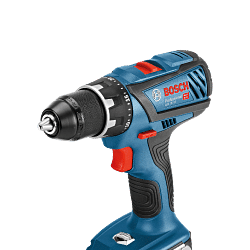
Column drills offer greater precision and stability than hand drills, thanks to their rigid structure and the ability to secure the workpiece.
What materials can be worked on with a column drill?
Column drills can machine a wide range of materials, including metal, wood and plastic, depending on the drill bit used.
How do you adjust the speed of a column drill?
The speed of a drill press can be adjusted via a drive belt or an electronic speed controller, depending on the model.
Is it possible to perform tapping operations with a drill press?
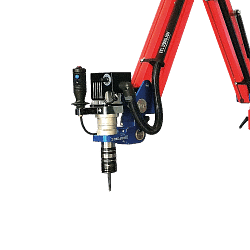
Yes, many column drills are fitted with tapping accessories, which allow you to cut internal threads in holes.
What safety precautions should be taken when using a pillar drill?
It is important to wear personal protective equipment, such as safety goggles and gloves, and to follow the manufacturer’s instructions to ensure the safe use of the column drill.
How do you maintain a column drill?
Maintenance includes regular cleaning, lubricating moving parts and checking the condition of the spindle and drill bits.
What is the ideal power rating for a pillar drill?
The ideal power output depends on the type of work and the material being worked on; for work on hard metals, a more powerful motor is recommended.
How do you secure the workpiece to a drill press?
The workpiece can be secured to the column drill table using clamps or fixing screws to ensure stability during drilling.
What are the advantages of a column drill over other types of drills?
Column drills offer greater precision, stability and versatility compared to other types of drills, making them ideal for precision work.
Can a pillar drill be used for reaming operations?
Yes, column drills can be used for reaming operations, thanks to their ability to perform precise and controlled drilling.Read More Read Less