< Workshop equipment Quick-release clamps
An introduction to quick-release clamps: an essential component for mechanical workshops
In the world of mechanical workshops, efficiency and precision are key to ensuring the quality of work and customer satisfaction. Among the tools that help achieve these objectives, quick-release clamps play a crucial role. These devices, designed to secure workpieces quickly and securely during machining, are indispensable for optimising production processes and reducing machine downtime.
What are quick-release clamps and how do they work?
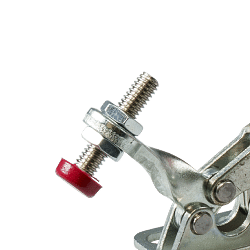
Quick-release clamps are mechanical devices used to securely clamp workpieces on machine tools. Their main function is to ensure that the workpiece remains stable during cutting, drilling, milling or turning operations. These devices are designed to be operated quickly and easily, allowing operators to save valuable time during machine set-up.
Quick-release clamps operate via a lever or cam mechanism that allows a high clamping force to be applied with minimal movement. This mechanism enables workpieces to be clamped and released quickly and safely, minimising the risk of errors or damage to the workpieces themselves.
Advantages of using quick-release clamps in machine shops
The use of quick-release clamps in machine shops offers numerous advantages, including:
1. Reduced set-up times: thanks to their ease of use, quick-release clamps significantly reduce the time needed to secure workpieces, thereby increasing overall productivity.
2. Increased precision: quick-release clamps ensure stable and secure clamping, minimising vibrations and unwanted movements during machining. This results in greater precision and higher quality of the machined workpieces.
3. Versatility: available in various shapes and sizes, quick-release clamps can be used on a wide range of machine tools and for different applications, making them a versatile tool that can be adapted to the specific needs of any workshop.
4. Safety: the quick-release mechanism reduces the risk of accidents during clamping operations, protecting both operators and workpieces.
5. Cost savings: the efficiency and speed of quick-release clamps help to reduce operating costs, improving the workshop’s profitability.
Practical applications of quick-release clamps
Quick-release clamps are used across a wide range of industrial sectors, including the automotive, aerospace and machinery manufacturing industries, amongst many others. In each of these sectors, quick-release clamps are used to secure workpieces of various shapes and sizes during machining operations.
For example, in the automotive industry, quick-release clamps are used to secure components during assembly and welding operations. In the aerospace industry, they are used to ensure the stability of workpieces during precision machining of advanced materials such as titanium alloys and composites.
How to choose the right quick-release clamp for your workshop
Choosing the quick-release clamp best suited to your workshop’s needs depends on several factors, including the type of machining, the size and shape of the workpieces, and the technical specifications of the machine tools used. Here are some aspects to consider when choosing a quick-release clamp:
- Clamping capacity: ensure that the quick-release clamping system you choose is capable of applying the clamping force required to keep the workpiece stable during machining.
- Compatibility with machine tools: check that the quick-release clamping system is compatible with the machine tools in your workshop, in terms of dimensions and mounting methods.
- Materials and construction: opt for quick-release clamps made from high-quality, wear-resistant materials to ensure a long service life and reliability over time.
- Ease of use: choose a quick-release clamp that is easy to operate and adjust, to minimise set-up times and improve operational efficiency.
Maintenance and care of quick-release clamps
To ensure the correct operation and long service life of quick-release clamps, it is important to carry out regular and thorough maintenance. Here are some tips for looking after your quick-release clamps:
- Regular cleaning: regularly remove dust, swarf and machining residues from the quick-release clamps to prevent the build-up of dirt that could compromise their operation.
- Lubrication: periodically apply a suitable lubricant to the clamping mechanisms to reduce friction and prevent premature wear.
- Visual inspection: check the quick-release fasteners regularly for any signs of wear or damage, and replace any damaged components immediately.
- Checking clamping force: Periodically test the clamping force of the quick-release fasteners to ensure they are still capable of providing a secure and stable hold.
Frequently asked questions about quick-release fasteners
What are the main types of quick-release fasteners available on the market?
There are several types of quick-release fasteners, including lever, cam, screw and pneumatic types, each with specific features suited to different applications.
How can I determine the clamping force required for my application?
The clamping force required depends on the type of machining and the material of the workpiece. It is advisable to consult the manufacturer’s technical specifications or an industry expert.
Are quick-release clamps suitable for fragile materials?
Yes, there are quick-release clamps specifically designed for fragile materials, which apply a controlled clamping force to prevent damage.
Can I use quick-release clamps on CNC machines?
Absolutely; quick-release clamps are widely used on CNC machines to improve machining efficiency and precision.
What is the average lifespan of a quick-release clamp?
The lifespan of a quick-release clamp depends on how often it is used and how well it is maintained. With proper care, they can last for several years.
Do quick-release clamps require specific training to use?
Although they are designed to be intuitive, some basic training is recommended to ensure correct and safe use.
Is it possible to automate the use of quick-release clamps?
Yes, there are automated systems that incorporate quick-release fasteners to further optimise production processes.
What are the most common materials used for quick-release fasteners?
Quick-release clamps are often made from steel, aluminium or composite materials to ensure strength and lightness.
How can I improve safety when using quick-release fasteners?
Ensure that operators are properly trained and that the clamps are regularly inspected and maintained.
Can quick-release clamps be customised for specific applications?
Yes, many manufacturers offer bespoke solutions to meet specific clamping requirements.Read More Read Less