< Hand tools Hex keys
An introduction to tap keys: an essential tool in engineering workshops
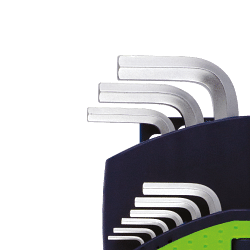
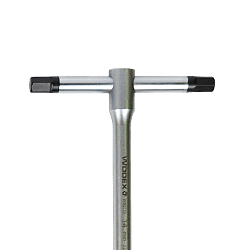
Tap keys are among the most widely used tools in engineering workshops and across various industrial sectors. These tools, also known as Allen keys, are essential for tightening and loosening screws and bolts with a recessed hexagonal head. Their versatility and precision make them indispensable for a wide range of applications, from the maintenance of industrial machinery to vehicle repairs.
Features of hex keys
Tap keys are designed to fit perfectly onto hex head screws, ensuring an excellent grip and reducing the risk of damaging the screw itself. They are available in various sizes, usually measured in millimetres or inches, to suit different screw standards. The length of the spanner can vary, providing greater leverage and access in confined spaces.
Materials and construction of tap keys
The quality of the material is crucial to the durability and effectiveness of tap keys. Generally, they are made from chrome-vanadium steel, known for its corrosion resistance and ability to withstand high stresses. Some models may be coated with non-slip finishes or surface treatments to improve grip and wear resistance.
Use of tap wrenches in mechanical workshops
In mechanical workshops, tap keys are used for a variety of tasks, including the assembly and maintenance of machinery. Their ability to reach recessed screws makes them ideal for precision work. Furthermore, the hexagonal shape allows for the application of uniform force, reducing the risk of damaging the bolt or the component being worked on.
Advantages of hex keys
Using tap keys offers numerous advantages. Firstly, their compact shape makes them easy to carry and store. Furthermore, the precision with which they fit hexagon screws reduces the risk of slipping and causing damage. Their versatility makes them suitable for a wide range of applications, from the automotive to the aerospace sectors.
Maintenance and care of hex keys
To ensure a long service life and optimum performance, it is important to look after your tap keys. After use, it is advisable to clean them to remove any oil or dirt. Furthermore, storing them in a dry place, protected from corrosion, helps to maintain their efficiency over time.
Frequently asked questions about hex keys
What is the difference between a tap key and an Allen key?
There is no difference; the terms are synonymous and refer to the same tool.
What are the most common sizes of tap keys?
The most common sizes range from 1.5 mm to 10 mm, but larger sizes are also available for specific applications.
Can tap keys be used on rusty screws?
Yes, but it is advisable to apply a lubricant to make the process easier and reduce the risk of damage.
Can a tap key be used on screws with a different head type?
No, they are specifically designed for screws with a recessed hexagonal head.
How do you choose the correct size of a tap key?
The correct size is chosen based on the screw’s diameter; it is important that the spanner fits perfectly to avoid damage.
Are tap keys suitable for precision work?
Yes, their shape and precision make them ideal for jobs requiring accuracy.
What are the best materials for tap keys?
Chrome-vanadium steel is one of the best materials due to its strength and durability.
Can tap keys be used with power tools?
Some models are designed for use with power tools, but it is important to check the manufacturer’s specifications.
How can you prevent tap keys from corroding?
Storing them in a dry place and cleaning them regularly helps to prevent corrosion.
Are tap keys interchangeable between metric and imperial systems?
No, it is important to use the correct spanner for the screw’s measurement system to ensure a secure grip.Read More Read Less