< Abrasives Fabric discs
An introduction to cloth-backed discs for surface finishing
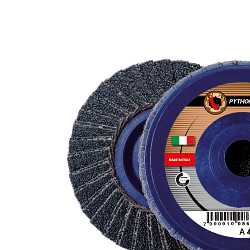
In the world of engineering workshops and manufacturing industries, efficiency and the quality of work are fundamental factors. Fabric discs for surface treatment represent an innovative and versatile solution for improving the finish and preparation of metal surfaces and beyond. These tools are designed to deliver superior performance in terms of durability and the quality of the final result, making them an ideal choice for a wide range of industrial applications.
Features and composition of fabric discs
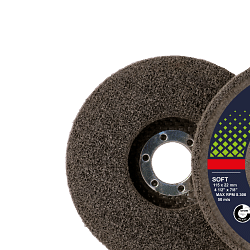
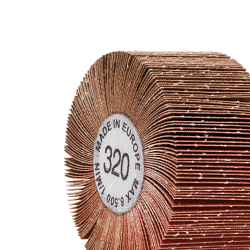
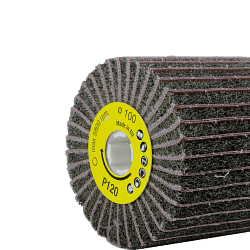
Fabric discs for surface treatment are made from high-quality materials, designed to withstand wear and ensure a long service life. They are composed of interwoven synthetic fibres, often reinforced with abrasive resins, which give the disc a robust yet flexible structure. This combination of materials allows the discs to adapt easily to uneven surfaces, ensuring a uniform and precise finish.
Applications and uses of fabric discs
These discs are widely used in various industrial applications, including rust removal, cleaning metal surfaces, surface preparation for painting and final polishing. Thanks to their versatility, fabric discs can be used on a variety of materials, including steel, aluminium, light alloys and even composite materials. Their ability to work effectively on complex surfaces makes them indispensable in sectors such as the automotive, aerospace and machinery manufacturing industries.
Advantages of fabric discs for surface treatment
The use of fabric discs offers numerous advantages over other surface treatment methods. Firstly, their flexible structure allows for a uniform finish to be achieved without damaging the underlying material. Furthermore, fabric discs are designed to minimise heat build-up during use, preventing deformation or alteration of the material being processed. Another significant advantage is their ability to reduce processing times, thanks to their efficiency and ease of use.
How to choose the right fabric disc
Choosing the most suitable fabric disc depends on several factors, including the type of material to be worked on, the desired finish and the specific requirements of the application. It is important to consider the grit size of the disc, which determines its abrasive capacity, and its size, which affects the contact area and processing speed. Consulting the manufacturer’s technical data sheets and recommendations can help you select the disc best suited to your needs.
Maintenance and storage of fabric discs
To ensure optimum performance and extend the service life of fabric discs, it is essential to follow proper maintenance practices. After each use, it is advisable to clean the discs to remove any material residue and dust. Furthermore, the discs should be stored in a dry environment, away from sources of heat and humidity, to prevent deterioration of the fibres and abrasive resins.
Innovations and future developments in fabric discs
The sector for fabric discs used in surface treatment is constantly evolving, with new technologies and materials continually improving the performance and efficiency of these tools. Recent innovations include the use of advanced synthetic fibres and environmentally friendly resins, which offer greater wear resistance and a reduced environmental impact. Furthermore, the development of discs with designs tailored to specific applications is further expanding their potential uses in the industrial sector.
FAQs on fabric discs for surface treatment
What are the main materials used in fabric discs?
Fabric discs are generally made from interwoven synthetic fibres reinforced with abrasive resins.
How do fabric discs differ from other abrasive discs?
Fabric discs offer greater flexibility and adaptability to uneven surfaces compared to traditional abrasive discs.
What are the most common applications for fabric discs?
They are used for rust removal, cleaning metal surfaces, surface preparation for painting and final polishing.
How does the grit size of the disc affect its performance?
The grit size determines the disc’s abrasive capacity; a finer grit produces a smoother finish, whilst a coarser grit is more aggressive.
Can cloth discs be used on non-metallic materials?
Yes, fabric discs can be used on composite materials and other non-metallic surfaces.
What are the environmental benefits of cloth discs?
New technologies use environmentally friendly resins, reducing the environmental impact compared to traditional discs.
How should cloth discs be stored correctly?
They must be stored in a dry place, away from sources of heat and moisture to prevent deterioration.
What are the recent innovations in fabric discs?
Innovations include the use of advanced synthetic fibres and designs tailored to specific applications.
How should fabric discs be cleaned after use?
It is advisable to remove any material residue and dust to maintain optimum performance.
Which industrial sectors benefit most from fabric discs?
Sectors such as the automotive, aerospace and machinery manufacturing industries derive significant benefits from the use of these discs.Read More Read Less