< Hand tools Torque wrenches
Professional torque spanners: an in-depth analysis for machine shops
In the world of machine shops, precision is a crucial element that cannot be overlooked. Among the tools that guarantee such precision, professional torque spanners occupy a prominent place. These tools are essential for ensuring that bolts and screws are tightened with the right amount of torque, thus preventing damage to components and ensuring safe operations.
What are professional torque spanners?
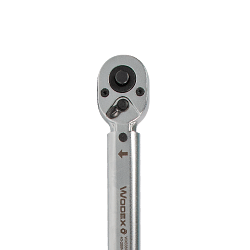
Torque spanners are measuring tools used to apply a specific amount of torque to a nut or bolt. Their main function is to ensure that threaded connections are tightened correctly, avoiding both over- and under-tightening. Professional torque spanners are designed to offer superior accuracy, making them ideal for critical applications where safety and reliability are paramount.
What are torque spanners used for?
Torque spanners are used in a wide range of industrial and mechanical applications. They are particularly important in the automotive, aerospace and manufacturing sectors, where the correct tightening of components is essential for the safe and reliable operation of machines. For example, in the automotive sector, torque spanners are used to tighten wheel bolts, engine components and other critical vehicle parts.
How are torque spanners used?
The correct use of a torque spanner is crucial to achieving the desired results. First of all, it is important to select the appropriate torque spanner for the specific application, taking into account the required torque range. Once the spanner has been selected, the desired torque value must be set using the graduated scale on the tool. During the tightening operation, it is essential to apply constant, even pressure until the spanner emits an audible or tactile signal indicating that the set torque value has been reached.
Advantages of professional torque spanners
The use of professional torque spanners offers numerous advantages. Firstly, they guarantee precise and uniform tightening, reducing the risk of damage to components and improving the overall safety of operations. In addition, the use of professional torque spanners can help extend the life of components, reducing the need for maintenance and costly repairs. Finally, the adoption of these tools can improve operational efficiency, allowing operators to complete tightening operations quickly and accurately.
Frequently asked questions about torque spanners
1. What is the difference between a latch torque spanner and a digital torque spanner?
Snap-on torque spanners emit an audible or tactile signal when the set torque value is reached, whereas digital torque spanners display the torque value on an electronic display and can offer additional features such as data storage.
2. How do you calibrate a torque spanner?
Calibrating a torque spanner is a process that must be performed regularly to ensure the accuracy of the tool. This process can be carried out using a torque spanner test bench, which allows the torque value emitted by the spanner to be checked and adjusted.
3. How often should I calibrate my torque spanner?
The frequency of calibration depends on use and the manufacturer's specifications, but in general, it is recommended to calibrate torque spanners at least once a year or after intensive use.
4. Can I use a torque spanner to unscrew bolts?
Although it is possible to use a torque spanner to unscrew bolts, it is important to remember that these spanners are primarily designed for tightening. Frequent use to unscrew bolts may affect the accuracy and lifetime of the tool.
5. What are the signs that a torque spanner needs maintenance?
Signs such as difficulty in reaching the set torque value, lack of an audible or tactile signal during tightening, or inconsistent readings may indicate that the torque spanner needs maintenance or calibration.
In conclusion, professional torque spanners are indispensable tools for machine shops that require precision and reliability in tightening operations. Their ability to ensure correct and uniform tightening not only improves safety and operational efficiency, but also helps to prolong component life and reduce maintenance costs. Investing in high-quality torque spanners and keeping them calibrated and in good condition is essential for any self-respecting machine shop.
Read More Read Less