An Introduction to Drills: Essential Tools for Mechanical Workshops
In the world of mechanical workshops, drills are among the most fundamental and versatile tools. These devices, which may seem simple at first glance, are in fact the result of technological evolution that has made them indispensable for a wide range of industrial applications. In this article, we will explore in detail what drills are, what they are used for, how they are operated and what benefits they offer in the context of mechanical workshops.
What are drills and how do they work
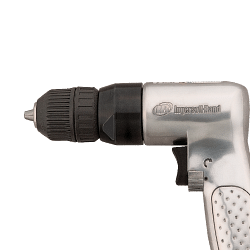
Drills are tools designed to drill holes in various materials, including metal, wood and plastic. They operate via a motor that generates a rotary motion, which is transmitted to an interchangeable drill bit. This bit can vary in size and shape depending on the material and the type of hole required. Drills can be powered by electricity, compressed air or batteries, offering different options for use depending on the specific needs of the workshop.
Applications of drills in mechanical workshops
In mechanical workshops, drills are used for a wide range of applications. From creating holes for assembling components, to cutting threads, right through to removing excess material, drills are versatile tools that improve the efficiency and precision of the work. The ability to use different drill bits and accessories allows the drill to be adapted to specific operational requirements, making it an indispensable tool for technicians.
Types of drills and their features
There are various types of drills, each with specific features that make them suitable for particular applications. Column drills, for example, are ideal for jobs requiring precision and stability, whilst portable drills offer greater flexibility and mobility. Hammer drills, on the other hand, are designed to tackle harder materials such as concrete. Choosing the right drill depends on the specific needs of the workshop and the type of work to be carried out.
Advantages of using drills in mechanical workshops
The use of drills in mechanical workshops offers numerous advantages. Firstly, they improve operational efficiency, enabling complex jobs to be carried out in less time. Furthermore, the precision of modern drills reduces the margin for error, ensuring high-quality results. The versatility of these tools allows a wide range of tasks to be tackled, reducing the need for additional equipment. Finally, the ergonomic design of modern drills helps to improve operator safety and comfort.
How to choose the right drill for your workshop
Choosing the right drill for your workshop requires a careful assessment of your operational needs. It is important to consider the type of materials you will be working on, the frequency of use and the technical specifications required. Furthermore, it is essential to assess the motor power, the rotation speed and the availability of compatible accessories. Investing in a high-quality drill can make all the difference in terms of efficiency and longevity.
Maintenance and care of drills
To ensure the longevity and efficiency of your drills, regular maintenance is essential. This includes cleaning moving parts, lubricating components and replacing worn drill bits. Furthermore, it is important to periodically check the operation of the motor and electrical parts to prevent sudden breakdowns. Proper maintenance not only extends the life of the drill but also ensures optimal performance over time.
Technological innovations in modern drills
In recent years, drills have benefited from significant technological innovations. The introduction of brushless motors, for example, has improved energy efficiency and reduced the need for maintenance. Furthermore, modern drills are often fitted with electronic speed control systems, which allow performance to be tailored to the specific requirements of the job. These innovations have made drills even more versatile and high-performing tools.
FAQs on drills in mechanical workshops
What are the main types of drills used in mechanical workshops?
The main types of drills include drill presses, portable drills and hammer drills, each with specific applications.
How do you choose the right drill bit?
The choice of drill bit depends on the material to be drilled and the type of hole required. It is important to select a drill bit that is compatible with the drill and the task at hand.
What are the advantages of cordless drills compared to mains-powered ones?
Cordless drills offer greater mobility and flexibility, whilst mains-powered drills provide constant and unlimited power.
How do you maintain a drill?
Maintenance includes cleaning the moving parts, lubricating the components and periodically checking the motor and electrical parts.
What are the latest technological innovations in drills?
Innovations include brushless motors, electronic speed control systems and ergonomic designs to improve efficiency and comfort.
How do you use a drill safely?
It is important to wear personal protective equipment, follow the manufacturer’s instructions and ensure that the drill is in good working order.
What accessories can be used with drills?
Accessories include drill bits of various sizes and shapes, interchangeable chucks and depth stops to improve the precision of the work.
What is the difference between a hammer drill and a standard drill?
A hammer drill is designed to tackle harder materials such as concrete, thanks to an additional hammering action.
How do you adjust the speed of a drill?
Many modern drills are fitted with electronic speed control systems, which allow you to adapt the performance to the specific requirements of the job.
What are the most common materials on which drills are used?
Drills are commonly used on metal, wood, plastic and concrete, depending on the type of bit and the drill’s specifications.Read More Read Less