< Workshop equipment Bench vices
Manual bench vices are an essential tool for machine shops, providing stable and secure support for a wide range of machining operations. These devices, although simple in their design, are essential to ensure precision and safety while working. In this in-depth look, we will explore in detail what manual bench vices are, what they are used for, how they are used, the advantages they offer and answer some of the most frequently asked questions on this topic.
Introduction to manual bench vises
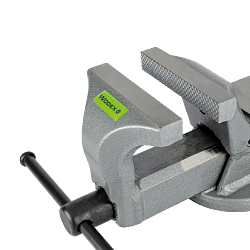
Manual bench vices are clamping tools used to hold a workpiece firmly in place during machining operations. They mainly consist of two jaws, one fixed and one movable, which are brought closer or further apart by means of a screw mechanism. This simple but effective system allows considerable force to be applied to the workpiece, ensuring that it remains stationary during the use of hand tools or machines.
Functionality and applications of manual bench vices
Manual bench vices find application in a wide range of industries, from handicrafts to large-scale production. They are used for cutting, filing, drilling, milling and assembly operations. Their ability to hold the workpiece precisely in place is crucial to achieving high quality results and preventing accidents on the job.
Advantages of manual vices
One of the main advantages of manual bench vices is their versatility. They can be used with a variety of materials, including metals, wood and plastic. In addition, their robust construction makes them suitable for bearing heavy loads and withstanding wear and tear over time. Manual bench vises are also relatively inexpensive compared to other clamping equipment, making them accessible to workshops of all sizes.
How to use manual bench vices correctly
The correct use of manual bench vices is crucial to ensure safe and effective machining operations. First of all, it is important to ensure that the vice is securely fixed to the workbench. This can be done using special bolts or clamps. Once the vice is fixed, the workpiece must be placed between the jaws and clamped with the correct pressure. It is essential not to over-tighten to avoid damaging the workpiece or the vice itself.
Maintenance of manual bench vices
To ensure a long service life and optimal operation, manual bench vises require regular maintenance. This includes cleaning the jaws and screw mechanism to remove swarf and debris that could affect operation. In addition, it is advisable to lubricate the screw periodically to ensure smooth movement and prevent corrosion.
Frequently asked questions about manual bench vises
1. What is the difference between a manual vise and a hydraulic vise?
Manual vises use a screw mechanism to apply clamping force, whereas hydraulic vises use a hydraulic system to generate more force with less manual effort.
2. How do I choose the right manual bench vice for my needs?
The choice of vice depends on the type of work you intend to do. It is important to consider the size of the jaws, the clamping capacity and the robustness of the construction.
3. Can manual bench vises damage machined parts?
If used correctly, manual vices should not damage workpieces. However, it is important not to apply excessive pressure and to use jaw guards when working with delicate materials.
Conclusion
Manual bench vises are indispensable tools for any machine shop. They offer a safe and stable support for a wide range of operations, helping to improve precision and work safety. With proper maintenance and use, these vices can last for many years, making them a valuable investment for any machining professional.
Read More Read Less