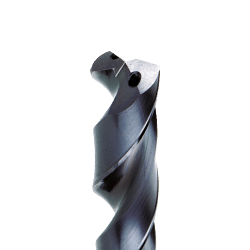
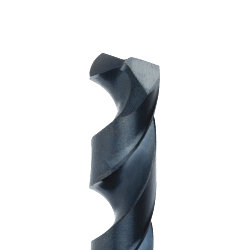
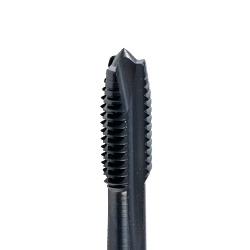
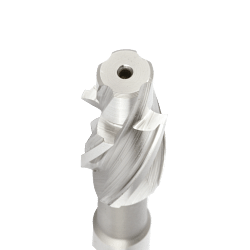
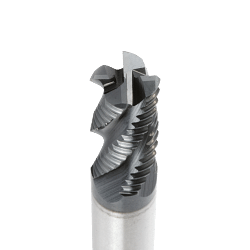
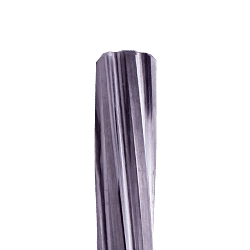
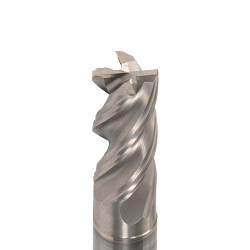
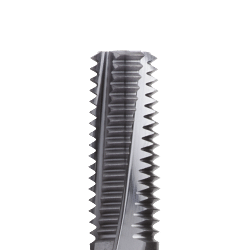
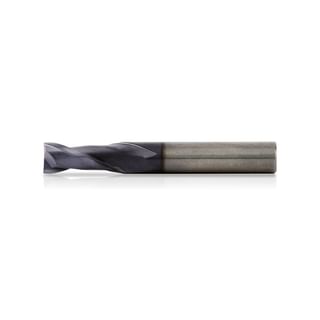
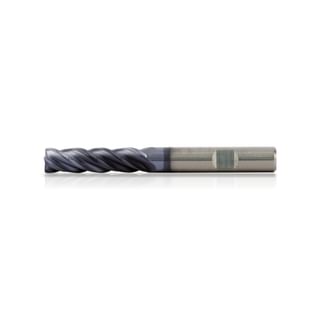
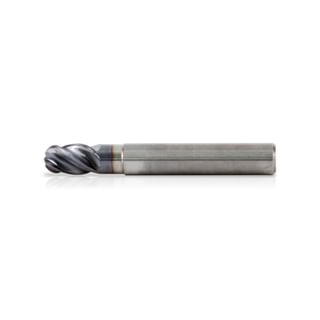
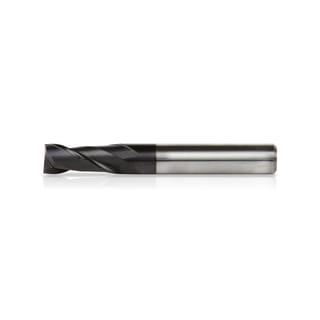
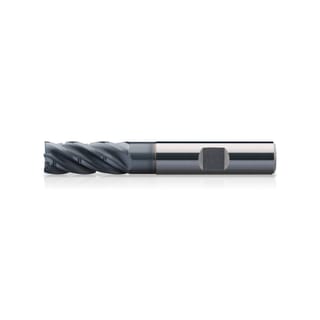
Solid carbide end mills are among the most widely used tools in precision machining today, because they enable high productivity, excellent surface quality and greater process continuity. Compared to less high-performance solutions, carbide offers a particularly effective combination of hardness, wear resistance and thermal stability, fundamental characteristics when working at high speeds or on demanding materials.
In this context, solid carbide end mills represent a high-level technical choice for all companies looking for precision, reliability and tool life. In fact, the rigidity of the material and the quality of the geometries make it possible to tackle roughing operations as well as semi-finishing and finishing operations with greater safety, reducing the risk of premature wear, vibrations and cutting instability.
The choice of the correct tool always depends on the material to be machined, the type of machine and the machining strategy. Solid carbide end mills for steel are designed to ensure mechanical strength, abrasion resistance and chip control even in tough materials. Solid carbide end mills for aluminium, on the other hand, are developed with geometries that favour chip discharge and limit the adhesion of material to the cutting edge, a decisive aspect for maintaining quality and stability in high-speed machining.
In modern production departments, CNC solid carbide end mills have become an operating standard in all applications where precision, repeatability and reduced cycle times are a competitive advantage. In many cutting conditions, solid carbide end mills are also widely used. They are particularly suitable when the objective is to improve heat resistance, increase tool life and optimise the behaviour of the cutter on steel, stainless steel and difficult materials.
For this reason, tungsten carbide milling tools are today a strategic solution for machine shops, industrial subcontractors, mould and die makers and manufacturing companies aiming for high production standards. Indeed, choosing professional milling cutters for machining means investing in tools that improve the efficiency, precision and reliability of the entire production process.
Why choose solid carbide end mills
Solid carbide end mills are appreciated because they allow more stable and productive machining than many traditional alternatives. The main advantages include
- greater wear resistance
- better stability at high temperatures
- higher cutting speeds
- good dimensional accuracy
- superior surface quality
- better production continuity in CNC machining
The real effectiveness of a milling cutter, however, depends on the correct combination of geometry, machined material, coating, setup rigidity and cutting parameters.
How to choose the most suitable solid carbide end mills
The correct choice depends not only on the tool diameter, but on a number of technical factors that directly affect performance:
Worked material
Steel, stainless steel, aluminium, cast iron and special alloys require different geometries.
Number of cutting edges
Fewer cutting edges favour chip evacuation; more cutting edges often improve rigidity and finish.
Coating
Solid carbide end mills can offer increased protection against wear, temperature and abrasion.
Type of machining
Roughing, semi-finishing and finishing require tools with specific characteristics.
Machine setup and clamping
Spindle, tool holder, workpiece clamping and tool projection influence stability and tool life.
Cutting parameters
Speed, feed, depth and pass width must be consistent with tool and application.
Solid carbide end mills FAQ
1. What are solid carbide end mills?
Solid carbide end mills are cutting tools made of cemented carbide, a material designed to offer high hardness, wear resistance and good thermal stability. They are used in precision machining and CNC applications where high performance, continuity of performance and consistent surface quality are required.
2. What is the difference between solid carbide end mills and HSS milling cutters?
Solid carbide end mills generally allow higher cutting speeds, better wear resistance and greater rigidity than HSS milling cutters. HSS end mills may be cheaper and more tolerant in some less demanding machining operations, but solid carbide is often the best choice when productivity, precision and tool life are priorities.
3. When to choose solid carbide end mills?
Solid carbide end mills are recommended when precision, rigidity and continuity of performance are required. They are particularly suitable for repetitive machining, production on CNC machines and applications where part quality, process stability and tool life have a direct impact on the final cost of production.
4. Which solid carbide end mills for steel are most suitable?
Solid carbide end mills for steel must offer a balanced combination of mechanical strength, effective geometry and chip control capability. In many cases, tools with multiple cutting edges and specific coatings are used, especially when working on alloy steels, tough materials or severe cutting conditions.
5. Which solid carbide end mills for aluminium should be used?
Solid carbide end mills for aluminium must promote chip evacuation and reduce the risk of jamming. For this reason, geometries with 2 or 3 cutting edges are often chosen, with large discharge chambers and configurations designed for fast, clean machining with good surface quality.
6. What are solid carbide end mills used for?
Solid carbide end mills are designed to improve wear resistance, increase thermal protection and extend tool life. They are particularly effective when machining steel, stainless steel and difficult materials. On aluminium, the choice of coating must be carefully considered in relation to the geometry and behaviour of the material being cut.
7. How many cutting edges must a solid carbide end mills have?
The number of cutting edges depends on the material being machined and the purpose of machining. In general, 2 cutting edges are widely used on aluminium and materials with bulky chips, 3 cutting edges are a versatile solution, while 4 or more cutting edges are frequently used for steel, stainless steel and finishing or more rigid machining.
8. Why does a solid carbide end mill break or wear too soon?
The most common causes are incorrect cutting parameters, excessive protrusion of the tool, poor clamping rigidity, vibration, a tool that is not suitable for the material or insufficient cooling. In practice, tool life always depends on the balance between choice of cutter, machine setup and actual machining conditions.
9. How do you choose the cutting parameters for carbide CNC milling cutters?
Cutting parameters must be defined according to the material machined, tool diameter, number of cutting edges, milling strategy, system rigidity and tool holder quality. The correct method is to start from the data provided by the manufacturer and progressively adapt it according to the actual behaviour of the tool and the workpiece during machining.
10. Is it worth regrinding a solid carbide end mills?
Resharpening can be cost-effective especially on high quality or medium to large diameter tools. However, whether it is really worthwhile depends on the cost of the operation, the level of performance required and whether the original geometry has been modified. In the most critical applications, replacement with a new tool is often the safest choice.
Applications of solid carbide end mills
Solid carbide end mills are used in numerous production contexts, including:
- precision CNC machining
- milling of steel, aluminium, stainless steel and cast iron
- general mechanics and industrial subcontracting
- mould and tool making
- production of high-precision components
- roughing, semi-finishing and finishing machining
Read More Read Less