< Measuring and precision tools Analogue dial gauges
An introduction to analogue dial gauges: essential tools for mechanical workshops
In the world of mechanical workshops, precision is paramount. The tools used must guarantee accurate measurements to ensure that every component is perfectly aligned and functioning correctly. Among these tools, analogue comparators play a crucial role. These devices, known for their reliability and precision, are essential for anyone working in the precision engineering sector. In this article, we will explore in detail what analogue comparators are, how they work, their advantages and their practical applications in mechanical workshops.
Understanding analogue comparators: definition and operation
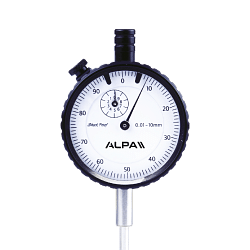
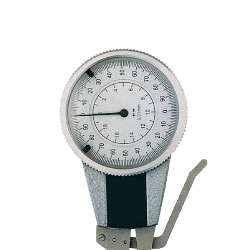
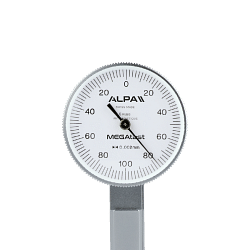
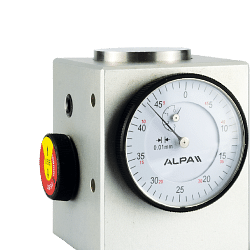
Analogue comparators are measuring instruments used to determine small dimensional variations in an object. They operate via a system of levers and gears that amplify the movement of a contact pin, translating it into a reading on a dial. This type of dial gauge is particularly valued for its ability to provide extremely precise measurements, often in the order of microns.
The operation of an analogue comparator is relatively simple: when the contact pin is moved, the movement is amplified by a system of levers and transmitted to a dial that displays the dimensional variation. This allows operators to detect even the smallest deviations from a reference measurement.
Practical applications of analogue comparators in mechanical workshops
In mechanical workshops, analogue comparators are used in a wide range of tasks. They are commonly used for quality control, where it is essential to verify that manufactured components comply with specified tolerances. Furthermore, they are used in the calibration of machinery, ensuring that equipment is perfectly aligned and functioning correctly.
Another key application is in the assembly of mechanical components, where analogue comparators help ensure that parts are assembled with precision. This is particularly important in sectors such as the automotive and aerospace industries, where even the slightest inaccuracy can have significant consequences.
Advantages of analogue comparators over other measuring instruments
Analogue comparators offer numerous advantages over other measuring instruments. Firstly, their simple design makes them extremely reliable and easy to use. They do not require a power supply, making them ideal for use in environments where electricity may not be available or safe.
Furthermore, analogue comparators are known for their robustness and durability. They can withstand harsh environmental conditions, such as dust and humidity, without compromising their accuracy. This makes them particularly suitable for use in mechanical workshops, where working conditions can be demanding.
How to use an analogue dial gauge correctly
Using an analogue comparator correctly is essential for obtaining accurate measurements. First of all, it is important to ensure that the instrument is correctly calibrated. This can be done using a reference block of known dimensions. Once calibrated, the comparator can be used to measure dimensional variations in an object.
During use, it is essential to apply constant pressure to the contact pin to avoid measurement errors. Furthermore, it is important to read the dial carefully, ensuring that the needle is correctly aligned with the graduated scale.
Maintenance and care of analogue comparators
To ensure that analogue comparators maintain their accuracy over time, regular maintenance is essential. This includes cleaning the instrument to remove dust and debris that could affect its operation. Furthermore, it is advisable to periodically lubricate the moving parts to ensure smooth and precise movement.
It is also important to store comparators in a dry, dust-free environment when not in use. This helps prevent corrosion and other damage that could compromise their accuracy.
FAQs on analogue comparators
What are analogue comparators?
Analogue comparators are measuring instruments used to detect small dimensional variations in an object, using a system of levers and a dial to display the measurements.
How do analogue comparators work?
They work by amplifying the movement of a contact pin via a lever system, which is then displayed on a dial.
What are the main applications of analogue comparators?
They are used for quality control, machine calibration and the assembly of mechanical components.
What are the advantages of analogue comparators?
They offer precision and reliability, require no power supply, and are robust and durable.
How do you calibrate an analogue dial gauge?
It is calibrated using a reference block of known dimensions to ensure accurate measurements.
What are the differences between analogue and digital comparators?
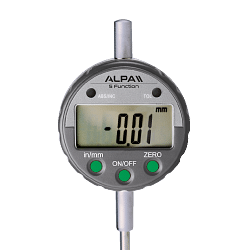
Analogue comparators use a dial to display measurements, whilst digital ones show the results on an electronic display.
How do you maintain an analogue comparator?
Maintenance includes cleaning, lubricating moving parts and storing it in a dry environment.
What are the typical tolerances that can be measured with an analogue comparator?
They can measure tolerances in the order of microns, depending on the model and calibration.
Are analogue comparators suitable for harsh environments?
Yes, thanks to their robustness and the absence of electronic components, they are ideal for harsh environments.
Which sectors benefit most from the use of analogue comparators?
Sectors such as the automotive, aerospace and precision engineering industries benefit greatly from the use of these instruments.Read More Read Less