< Hand tools Mechanical and conical pullers
Conical and mechanical extractors are essential tools in the machine shop landscape, where precision and reliability are essential requirements. Although these devices may seem simple in their design, they play a crucial role in many industrial applications, ensuring efficient and safe operations.
Understanding conical and mechanical extractors
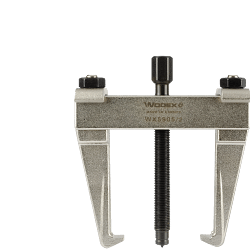
Bevel and mechanical extractors are designed to remove jammed or stuck components, such as bearings, gears and pulleys, without damaging surrounding parts. Their robust construction and ingenious design allow a controlled force to be applied, minimising the risk of damage. Conical extractors, in particular, use a wedge mechanism that expands inside the component to be removed, while mechanical extractors employ a system of levers or screws to exert the necessary force.
Applications and use of extractors
In machine shops, conical and mechanical extractors are used in a wide range of operations. They are indispensable tools for the maintenance and repair of industrial machinery, where the safe removal of worn or damaged components is crucial to restoring functionality. They are also used in the production of new machinery, where precision assembly is crucial.
The use of these extractors requires specific technical skills. It is essential to select the appropriate extractor according to the type of component and the specifications of the work to be performed. The operator must be able to apply the right amount of force, avoiding excesses that could compromise the integrity of the component or machinery.
Advantages of using conical and mechanical extractors
The adoption of conical and mechanical extractors offers numerous advantages. Firstly, they guarantee high precision in the removal of components, minimising the risk of damage. This translates into significant cost savings, as the need to replace damaged parts is reduced. In addition, operational efficiency is greatly improved, as the extractors allow operations to be completed in less time than traditional methods.
Another significant advantage is safety. The use of extractors reduces the risk of accidents at work, as it minimises the need for direct manual intervention, which can be dangerous. This is especially important in industrial environments, where the safety of workers is a top priority.
Frequently asked questions about conical and mechanical extractors
One of the most common questions concerns the difference between conical and mechanical extractors. While both are used to remove stuck components, the choice between the two depends on the type of application. Conical extractors are ideal for components that require an internal expanding force, while mechanical extractors are more suitable for applications that require an external pulling force.
Another frequent question concerns the maintenance of the extractors themselves. It is essential to keep the extractors in good working condition, carrying out regular checks and lubrication to ensure their efficiency and longevity. Operator training is equally important, as improper use can compromise the functionality of the tools.
Innovations and the future of extractors
The field of conical and mechanical extractors is constantly evolving, with innovations aimed at further improving efficiency and safety. The integration of advanced materials and precision technologies is leading to lighter, stronger and more user-friendly extractors. In addition, automation and the use of intelligent sensors are opening up new possibilities for real-time monitoring of operations, allowing for faster and more precise interventions.
In conclusion, conical and mechanical extractors are indispensable tools in modern machine shops. Their ability to remove stuck components with precision and safety makes them a valuable investment for any industrial operation. As technologies continue to evolve, the future of extractors promises further improvements in efficiency and safety, consolidating their central role in industry.
Read More Read Less