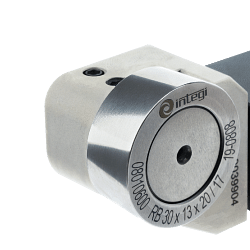
An introduction to positive and negative turning inserts
In the world of machine shops, efficiency and precision are essential to ensuring the quality of the final product. Turning inserts, both negative and positive, play a crucial role in this context. When selected and used correctly, these components can significantly improve the performance of machine tools, reducing machining times and extending the service life of the tools themselves.
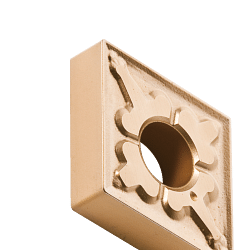
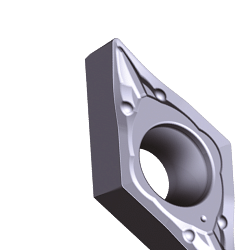
Turning inserts are interchangeable elements that are fitted to cutting tools to machine different materials. Their main function is to remove excess material from the workpiece, ensuring a high-quality surface finish. Inserts can be classified into two main categories: negative and positive. This distinction is based on the insert’s rake angle, which directly influences how the insert interacts with the material being machined.
Features of negative turning inserts
Negative turning inserts are characterised by a rake angle of zero or negative. This means that the upper surface of the insert is parallel to or inclined towards the workpiece. This configuration offers several advantages, including greater strength and stability of the insert. Negative inserts are particularly suitable for heavy-duty machining and hard materials, as they can withstand high cutting loads without deforming.
Another advantage of negative inserts is that they can be used on both sides, which extends their service life. However, they require greater machine power and can generate higher cutting forces, which may not be ideal for less powerful machines or more delicate materials.
Advantages of positive turning inserts
Positive turning inserts, by contrast, have a positive rake angle, meaning that the upper surface of the insert is inclined away from the workpiece. This configuration reduces cutting forces and requires less power from the machine, making them ideal for light machining and softer materials.
Positive inserts offer a better surface finish and are better suited to precision machining. However, their structure is less robust than that of negative inserts, making them less suitable for heavy-duty machining or very hard materials.
Practical applications of turning inserts
The choice between negative and positive inserts depends on several factors, including the type of material to be machined, the machine’s power and the type of machining required. Negative inserts are often used in heavy-duty industrial applications, such as machining hard steels and high-strength alloys. They are ideal for roughing operations, where large amounts of material need to be removed quickly and efficiently.
Positive inserts, on the other hand, are preferred for finishing operations and for softer materials such as aluminium and light alloys. They are used in applications where precision and surface quality are crucial, such as in the production of components for the aerospace and automotive industries.
How to choose the right insert for your application
Choosing the right insert is crucial for optimising the performance of your machine tool. It is important to consider the type of material to be machined, the machine’s power and the type of machining required. Furthermore, it is essential to assess the desired surface finish quality and the insert’s service life.
To choose the right insert, it is advisable to consult the technical specifications provided by the manufacturer and, where possible, carry out practical tests to determine which insert offers the best performance for your specific application.
Maintenance and care of turning inserts
Maintenance of turning inserts is essential to ensure optimum performance and extend their service life. It is important to check the inserts regularly for any signs of wear or damage. Worn or damaged inserts must be replaced immediately to avoid quality issues during machining.
Furthermore, it is vital to keep the inserts and the tool on which they are mounted clean. Regular cleaning helps prevent the build-up of swarf and debris, which can adversely affect the insert’s performance.
Innovations in the range of turning inserts
In recent years, the turning insert sector has seen a number of technological innovations. Manufacturers are developing new materials and coatings to improve the durability and performance of inserts. For example, the use of titanium nitride and titanium carbonitride coatings has improved the wear resistance and cutting ability of the inserts.
Furthermore, the adoption of advanced manufacturing technologies, such as 3D printing, is opening up new possibilities for customising inserts, allowing them to be better tailored to the specific requirements of applications.
Conclusion: the importance of turning inserts in the industrial sector
Turning inserts, whether negative or positive, are essential components in the machine shop sector. Choosing and using them correctly can significantly impact the efficiency and quality of machining. Understanding the differences between negative and positive inserts and knowing how to choose the right insert for your application is crucial for optimising the performance of your machine tool.
FAQs on turning inserts
What is the main difference between negative and positive inserts?
The main difference lies in the rake angle: negative inserts have a rake angle of zero or negative, whilst positive inserts have a positive rake angle.
What are the advantages of negative inserts?
Negative inserts offer greater strength and stability, making them ideal for heavy-duty machining and hard materials.
When is it preferable to use positive inserts?
Positive inserts are preferable for light machining and soft materials, as they require less power and offer a better surface finish.
How can I extend the service life of turning inserts?
To extend the service life of inserts, it is important to carry out regular maintenance, replace worn inserts and keep the tools clean.
Which materials are best suited to negative inserts?
Negative inserts are best suited to hard materials such as steels and high-strength alloys.
Can positive inserts be used for heavy-duty machining?
Generally speaking, positive inserts are not ideal for heavy-duty machining due to their lower strength.
What innovations are shaping the turning insert sector?
Innovations such as new coatings and advanced manufacturing technologies are improving the tool life and performance of inserts.
How do I choose the right insert for my application?
Choosing the right insert depends on the type of material, the machine’s power and the type of machining required.
What are the signs of wear in turning inserts?
Signs of wear include blunted edges, cracks and a reduction in surface finish quality.
Can turning inserts be customised?
Yes, thanks to advanced technologies such as 3D printing, it is possible to customise inserts to better suit the specific requirements of different applications.Read More Read Less