Industrial cantilever racks are an essential solution for machine shops and industries that require efficient and organised storage of long and bulky materials. These racking systems are designed to offer high load capacity and unparalleled flexibility, making them ideal for storing pipes, bars, profiles and other materials that require robust and accessible support.
Understanding industrial cantilever racking
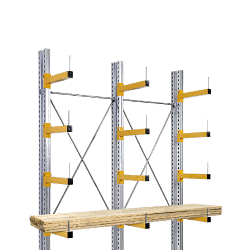
Cantilever racking consists of a series of horizontal arms extending from a vertical column, creating an open, unobstructed structure. This configuration allows materials of varying lengths to be stored without the need for intermediate shelves, facilitating access and handling of loads. The vertical columns are firmly anchored to the floor, guaranteeing stability and safety even under heavy loads.
Advantages of cantilever racking
One of the main advantages of cantilever racking is its ability to adapt to different storage needs. The modularity of the system allows the height and length of the arms to be adjusted, making it possible to customise the configuration to the company's specific needs. In addition, the open structure of cantilever racks facilitates access to materials, reducing loading and unloading times and improving operational efficiency.
Applications in machine shops
In machine shops, cantilever racking is particularly useful for storing metal materials, such as tubes and bars, which are commonly used in the production and machining of mechanical components. The possibility of storing these materials in an orderly and accessible manner allows for the optimisation of available space and improves workflow within the workshop.
Materials and construction of cantilever racks
Industrial cantilever racks are generally made of high-quality steel, which offers strength and durability. The choice of materials is crucial to ensure the safety and stability of the structure, especially when it comes to supporting heavy loads. Racking surfaces can be treated with protective coatings to prevent corrosion and prolong the life of the system.
Safety considerations
Safety is a crucial aspect in the use of cantilever racking. It is essential to ensure that the racking is correctly installed and that loads are evenly distributed to avoid the risk of tipping. In addition, it is important to carry out regular inspections to check the integrity of the structure and intervene promptly in the event of damage or wear and tear.
Frequently asked questions about cantilever racking
1. What is the load capacity of cantilever racking? The load capacity of cantilever racks varies depending on the design and materials used. It is important to consult the manufacturer's specifications to determine the maximum load capacity for your chosen configuration.
2. Can cantilever racking be used outdoors? Yes, cantilever racks can be used outdoors, provided they are made of weather-resistant materials and treated with protective coatings to prevent corrosion.
3. Can the configuration of cantilever racking be modified? Yes, cantilever racking is designed to be modular and flexible, allowing the height and length of the arms to be adjusted according to storage needs.
4. What are the maintenance requirements for cantilever racking? Cantilever racking requires minimal maintenance, but it is important to carry out regular inspections to check the integrity of the structure and take action in the event of damage or wear and tear.
5. How do I choose the right cantilever racking for my workshop? The choice of cantilever racking depends on the specific storage needs of your workshop. It is important to consider the length and weight of the materials to be stored, as well as the available space and environmental conditions.
Conclusion
Industrial cantilever racks are a versatile and robust solution for storing long and bulky materials in machine shops. Thanks to their modular configuration and high load capacity, these racks offer an efficient and safe option for optimising space and improving workflow. Choosing the right cantilever racking and ensuring proper installation and maintenance are key steps in maximising the benefits of this storage system.