< Milling cutters Facing cutters
An introduction to face milling cutters and inserts
In the world of machine shops, precision and efficiency are key to ensuring the quality of the final product. Among the most commonly used tools for achieving perfectly smooth and uniform surfaces are face milling cutters and inserts. These tools are essential for machining operations that require high precision and a flawless finish. In this article, we will explore in detail what face milling cutters and inserts are, what they are used for, how they are used and what advantages they offer. We will also answer the most frequently asked questions on this topic.
What are face milling cutters and inserts?
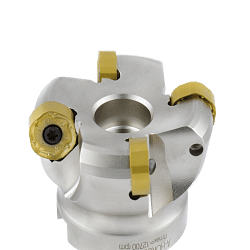
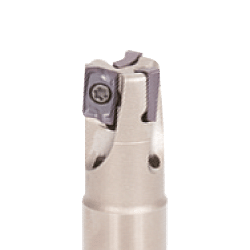
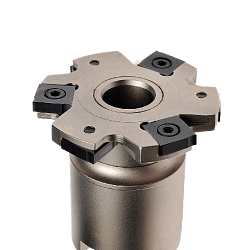
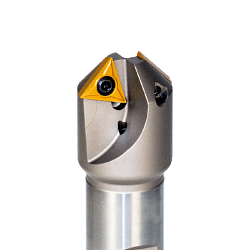
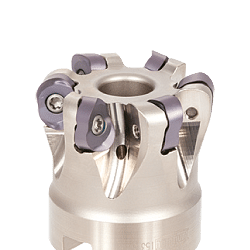
Facing cutters are cutting tools used primarily for machining flat surfaces on metallic materials. These tools are designed to remove excess material from a surface, creating a smooth and uniform finish. Facing inserts, on the other hand, are interchangeable components fitted onto the cutters, made from durable materials such as tungsten carbide, which ensure a long service life and high wear resistance.
What are face milling cutters and inserts used for?
Facing cutters and inserts are primarily used for machining flat surfaces on metal workpieces. These tools are essential in a wide range of industrial sectors, including the automotive, aerospace and machinery manufacturing industries, where precision and surface quality are of paramount importance. Facing cutters enable perfectly smooth surfaces to be achieved, minimising imperfections and improving the aesthetics and functionality of the final product.
How are face milling cutters and inserts used?
Using face milling cutters and inserts requires technical expertise and a thorough understanding of machine tools. Before starting the machining process, it is essential to select the face milling cutter and inserts best suited to the material being machined and the project specifications. Once fitted to the machine tool, it is important to correctly adjust the cutting parameters, such as feed rate and cutting depth, to ensure efficient and safe machining. During operation, it is essential to constantly monitor the process to prevent overheating or damage to the tools.
Advantages of face milling cutters and inserts
The use of face milling cutters and inserts offers numerous advantages. First and foremost, these tools enable the production of high-quality surfaces with a flawless finish, minimising the need for subsequent machining operations. Furthermore, thanks to their high precision, face milling cutters improve production efficiency by reducing machining times and associated costs. The interchangeable inserts, made from durable materials, ensure a long service life and lower maintenance costs. Finally, the use of face milling cutters and inserts helps to improve workplace safety by reducing the risk of accidents caused by imprecise machining or damaged tools.
Frequently asked questions about face milling cutters and inserts
Which materials can be machined with face milling cutters?
Facing cutters are suitable for machining a wide range of metallic materials, including steel, aluminium, copper and special alloys.
What is the difference between face milling cutters and general-purpose milling cutters?
Facing cutters are specifically designed to create flat surfaces, whilst general-purpose milling cutters can be used for a variety of machining operations, including grooving and contouring.
How do I choose the right inserts for my application?
The choice of inserts depends on the material to be machined, the design specifications and the machining conditions. It is important to consult the manufacturer’s technical specifications.
What are the signs of wear on face milling inserts?
Signs of wear include a reduction in the quality of the machined surface, increased vibration and overheating of the tools.
Can face milling inserts be re-sharpened?
Generally speaking, face milling inserts are not designed to be re-sharpened. Once worn, they must be replaced.
What are the best practices for maintaining face milling cutters?
Best practices include regularly cleaning the tools, checking the condition of the inserts and lubricating moving parts.
How can I improve the service life of facing inserts?
To improve the service life of the inserts, it is important to use appropriate cutting parameters, avoid overheating and replace worn inserts promptly.
What are the current trends in the design of face milling cutters?
Current trends include the use of advanced materials for inserts, optimised designs to reduce vibration, and coating technologies to improve wear resistance.
How does feed rate affect surface quality?
An excessively high feed rate can compromise surface quality, causing vibrations and imperfections. It is important to strike a balance between speed and quality.
What are the safety considerations when using face milling cutters?
Safety considerations include the use of personal protective equipment, checking the condition of the tools, and adopting safe working practices to prevent accidents.Read More Read Less