< Clamping systems Live centers
An introduction to tailstocks: an essential component in machine shops
Tailstocks are fundamental components in mechanical machining, used primarily on lathes to support long or unstable workpieces during machining. These tools are essential for ensuring precision and stability, minimising vibrations and improving the quality of the final product. In this article, we will explore in detail what tailstocks are, how they are used, their advantages, and answer the most frequently asked questions on this topic.
What are tailstocks and how do they work?
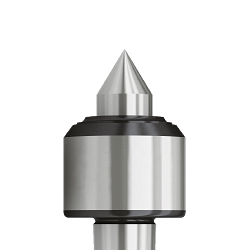
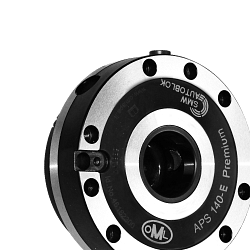
Tailstocks are mechanical devices that are fitted to lathes and other machine tools to provide support for long or slender workpieces. They consist of a cylindrical body with a conical tip that is inserted into the workpiece. The main function of the tailstock is to hold the workpiece in place, reducing vibrations and improving machining accuracy.
The operation of tailstocks is relatively simple: the conical tip is inserted into a pre-drilled hole in the workpiece, whilst the body of the tailstock is securely fixed to the machine tool. This allows the workpiece to rotate freely whilst being supported, ensuring uniform and precise machining.
Use of tailstocks in machining
Tailstocks are used in a wide range of applications in machine shops. They are particularly useful when working with long or slender workpieces that might bend or vibrate during machining. Tailstocks provide additional support, helping to keep the workpiece stable and reducing the risk of errors or defects in the final product.
Furthermore, tailstocks are essential for machining operations requiring high precision, such as turning shafts or axles. Thanks to the support they provide, it is possible to achieve smooth surfaces and precise dimensions, thereby improving the overall quality of the product.
Advantages of using tailstocks
The use of tailstocks offers numerous advantages in machining. Firstly, they improve the stability of the workpiece, reducing vibrations and increasing machining accuracy. This results in a higher-quality finished product and shorter machining times, as it is possible to machine at higher speeds without compromising accuracy.
Furthermore, tailstocks help prevent premature tool wear, as they reduce cutting forces and distribute the load evenly across the workpiece. This not only extends the service life of the tools but also reduces overall operating costs.
Types of tailstocks and their specific applications
There are several types of tailstocks, each designed for specific applications. Fixed tailstocks are the most common and are used to support workpieces in general-purpose applications. Rotating tailstocks, on the other hand, are fitted with bearings that allow the tailstock to rotate along with the workpiece, reducing friction and improving precision.
Adjustable tailstocks allow the position of the centre to be adjusted, enabling them to accommodate workpieces of different sizes and shapes. Finally, tapered tailstocks are used for machining operations requiring high precision, such as turning conical or threaded surfaces.
Maintenance and care of tailstocks
To ensure optimal performance and a long service life for centre points, regular maintenance is essential. This includes cleaning the contact surfaces to remove swarf and debris, lubricating the bearings to reduce friction, and carrying out periodic inspections to identify any signs of wear or damage.
Furthermore, it is important to store tailstocks in a dry, clean environment to prevent corrosion and ensure they are always ready for use. Proper maintenance not only extends the service life of tailstocks but also ensures they continue to provide precise and reliable support during machining operations.
FAQs on tailstocks
What is the main function of a tailstock?
The main function of a tailstock is to support long or slender workpieces during machining, reducing vibrations and improving accuracy.
What are the advantages of rotating tailstocks over fixed ones?
Rotating tailstocks reduce friction and improve accuracy thanks to bearings that allow the tailstock to rotate along with the workpiece.
How are tailstocks maintained?
Maintenance of tailstocks includes cleaning the contact surfaces, lubricating the bearings and carrying out regular inspections to check for signs of wear.
What materials are used to manufacture centre points?
Centre points are generally made from hardened steel or tungsten carbide to ensure strength and durability.
How do you choose the right centre for a specific application?
The choice of tailstock depends on the type of machining, the size of the workpiece and the level of precision required.
Can tailstocks be used on all machine tools?
Centre points are mainly used on lathes, but can be adapted for use on other machine tools with the appropriate modifications.
What is the difference between a fixed tailstock and an adjustable one?
Fixed tailstocks have a fixed position, whilst adjustable tailstocks allow the position of the centre to be adjusted to suit workpieces of different sizes.
What are the signs of wear on a tailstock?
Signs of wear include scratched surfaces, noisy or seized bearings, and a reduction in machining accuracy.
Can a damaged tailstock be repaired?
In some cases, damaged tailstocks can be repaired by replacing the bearings or grinding the tip, but it is often more cost-effective to replace them.
What are the best practices for storing tailstocks?
Tailstocks should be stored in a dry, clean environment, away from moisture and corrosive substances, to prevent corrosion and ensure optimal performance.Read More Read Less