< Measuring and precision tools Analogue gauges
Precision analogue dial gauges: essential tools for the mechanical industry
In the mechanical industry, precision is a crucial element that determines the quality and reliability of end products. Precision analogue dial gauges are one of the most important tools for ensuring that measurements are accurate and repeatable. These devices are used to measure small variations in dimensions, ensuring that mechanical components adhere to specified tolerances.
The fundamental role of analogue precision dial gauges
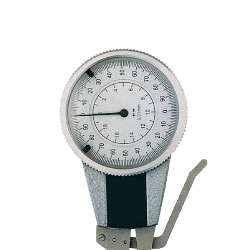
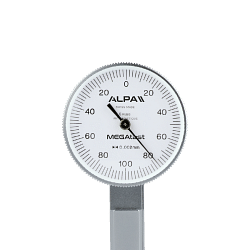
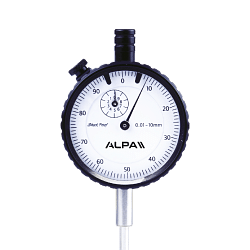
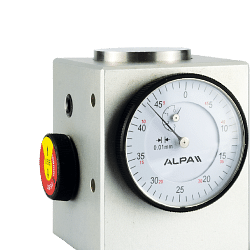
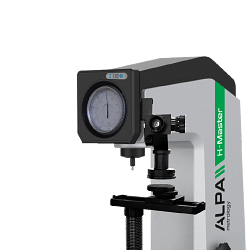
Precision analogue dial gauges are measuring instruments that amplify small variations in dimensions, making them visible on a graduated scale. They are commonly used in machine shops to check the conformity of machined parts. Their ability to provide precise measurements makes them indispensable in industries where quality and accuracy are paramount, such as the automotive, aerospace and manufacturing industries.
How analogue dial gauges work
The operating principle of analogue precision dial gauges is based on a system of levers and gears that amplify the movement of a contact pin. When the pin comes into contact with the surface of the workpiece to be measured, any change in size is transmitted through the lever system, causing the indicator on the dial gauge to move. This movement is proportional to the change in dimension, allowing the measurement to be read accurately.
Practical applications in machine shops
In machine shops, analogue precision dial gauges are used for a wide range of applications. They are used to check the flatness of surfaces, the concentricity of holes, and the straightness of guides. They are also essential for quality control, where they are used to verify that components meet design specifications. Their versatility makes them suitable for both production and laboratory measurements.
Advantages of using analogue dial gauges
The use of precision analogue dial gauges offers several advantages. First of all, their ability to provide highly accurate and repeatable measurements is fundamental to guaranteeing product quality. Furthermore, their ease of use and robustness make them suitable for the shop floor environment, where they can withstand harsh conditions. Finally, their ability to measure small variations in size makes them ideal for applications where accuracy is essential.
Frequently asked questions about analogue precision dial gauges
1. What is the difference between an analogue and a digital dial gauge?
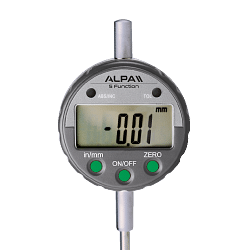
Analogue dial gauges use a graduated scale to display measurements, whereas digital dial gauges show results on a digital display. Analogue ones are often preferred for their simplicity and robustness, while digital ones offer more immediate readability and can be connected to data acquisition systems.
2. How do I calibrate an analogue dial gauge?
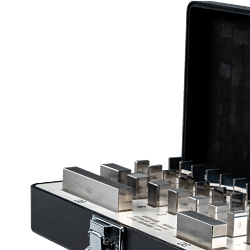
Calibrating a precision analogue dial indicator is essential to ensure accurate measurements. This process involves using calibration blocks of known dimensions to adjust the indicator so that readings are correct.
3. What are the typical tolerances that can be measured with an analogue dial indicator?
Precision analogue dial gauges are capable of measuring very tight tolerances, often in the order of a few microns. This makes them ideal for applications where accuracy is critical.
4. What are the limitations of precision analogue dial gauges?
Although they are extremely precise instruments, analogue dial gauges can be affected by environmental factors such as temperature and humidity. In addition, they require regular maintenance to ensure that the lever and gear system works properly.
Conclusions
Precision analogue dial gauges are indispensable tools in machine shops, where quality and precision are paramount. Their ability to provide accurate and repeatable measurements makes them essential for ensuring that mechanical components meet design specifications. With a thorough understanding of their operation and applications, companies can significantly improve the quality of their products and customer satisfaction.
Read More Read Less