< Furnishings and storage Spill pallets for drum storage
Drum trays are an essential element for workshops and industries that need to handle drums containing hazardous substances in a safe and compliant manner. These tools not only ensure the safety of personnel and the environment, but are also essential for complying with current regulations on the storage and management of hazardous waste. In this report, we will explore in detail what drum tanks are, what they are used for, how they are used, the advantages of using them and answer some of the most frequently asked questions on this topic.
What are drum tanks?
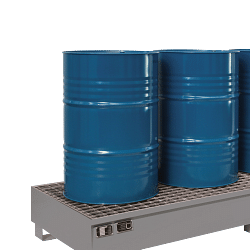
Drum tanks are structures designed to hold drums of various sizes, usually used for storing hazardous or flammable liquids. Made of durable materials such as steel or polyethylene, these tanks are equipped with a collection system that prevents the escape of chemicals, thus protecting the environment and people from potential hazards. Their design takes safety regulations into account, ensuring that any leaks are contained within the tank itself.
What are drum tanks used for?
Drum tanks are primarily used to ensure the safe storage of drums containing hazardous substances. In an industrial context, where the use of chemicals is frequent, it is essential to have a system that prevents environmental contamination and reduces the risk of accidents. Drum tanks offer an effective solution to contain possible leaks, thus protecting soil and groundwater from contamination. They also facilitate the management of hazardous waste, making it easier to dispose of in accordance with current regulations.
How are drum tanks used?
The use of drum tanks is relatively simple, but requires care and attention to ensure maximum effectiveness. First, it is important to place the tank on a flat, stable surface, making sure that it is easily accessible for loading and unloading drums. Drums should be placed inside the tank in an orderly manner, avoiding overlaps that could compromise stability. It is essential to check the tank regularly for leaks or structural damage. In the event of spills, the tank must be emptied and cleaned immediately to avoid corrosion or contamination.
Advantages of drum tanks
The adoption of drum tanks brings numerous advantages to workshops and industries. Firstly, they provide a high level of safety, reducing the risk of accidents involving the spillage of hazardous substances. This not only protects personnel, but also the surrounding environment. In addition, drum tanks help companies comply with environmental regulations, avoiding penalties and improving their reputation in terms of sustainability. From an operational point of view, they facilitate drum management, making storage and disposal operations more efficient. Finally, the investment in quality drum tanks can result in long-term financial savings by reducing costs related to accidents and penalties.
Frequently asked questions about drum tanks
1. Which materials are most suitable for drum trays?
Drum trays can be made of different materials, including steel and polyethylene. The choice of material depends on the type of substances to be stored. Steel is ideal for flammable substances, while polyethylene is resistant to many corrosive chemicals.
2. Are drum trays required by law?
In many countries, environmental regulations require the use of drum tanks for the storage of hazardous substances. It is important to check local laws to ensure you are in compliance.
3. How is the maintenance of drum tanks carried out?
Maintenance of drum tanks involves regular checks for structural integrity and leaks. It is advisable to clean the tank periodically and replace it if there is significant damage.
4. What is the ideal capacity of a drum tray?
The capacity of the tank depends on the number and size of drums to be stored. It is important to choose a tank that can hold at least 110% of the total drum volume to ensure maximum safety.
5. Can drum tanks be used outdoors?
Yes, many drum tanks are designed to withstand outdoor weather conditions. However, it is important to ensure that they are placed on a stable surface and protected from extreme weather conditions.
In conclusion, drum trays are a crucial element for the safe and compliant handling of drums containing hazardous substances in workshops and industries. Their adoption not only improves safety and environmental sustainability, but also offers significant operational and economic benefits. Investing in quality drum tanks is a strategic choice that can make all the difference in the day-to-day running of industrial operations.
Read More Read Less